My name is Leroy. I’ve been a professional chef for sixteen years, and I’ve spent the last few of them rebuilding a back that sciatica had taken squats and deadlifts away from.
That combination is the whole reason this site exists. The food side comes from a career doing it for a living. The training side comes from losing the ability to do the two lifts I cared about most, and working out how to get them back.
Why a chef writes about training
Sixteen years of kitchens teaches you things about food that no nutrition article does.
It teaches you that the meal you’ll actually eat every day beats the meal that looks better on paper. When I was building most of my strength, I ate close to the same thing daily — a big pot of chicken and veg, a big pot of rice, a protein shake, yoghurt, a piece of fruit. A clean carb, a clean protein, and not much variety. It wasn’t exciting. It was repeatable, and repeatable is what worked.
It also teaches you that repetition only survives if the food tastes good. The thing that keeps a boring meal alive is a small set of staples you’ve refined over years — for me that’s Aromat, Frank’s Red Hot and lemon juice, and I arrived at those the long way round. That’s the sort of detail you only get from cooking every day for a living, and it’s the difference between a diet you follow and a diet you abandon in a fortnight.
I don’t have a nutrition certificate. What I have is sixteen years of feeding people professionally and a decade of feeding myself for a specific result.
What happened to my back
Before the injury I was 75kg and training the basics properly — deadlift, squat, bench, dips, pull-ups, four sets of each, working between 60 and 80kg. Nothing remarkable, but consistent, and going in the right direction.
Then I went for one more rep on a 90kg squat. I completed it. Something popped, and it was an hour before I could walk. I genuinely thought I’d need an ambulance.
What followed was the part I’d want anyone in the same position to hear. I didn’t stop and recover properly, because I couldn’t — I was working fifty to sixty hour weeks in a kitchen and there was nobody else to cover my life. So I trained around it. Deadlifts gone. Squats gone. Standing for a full shift became its own problem. I ran 5k after shifts because it was the only thing left that kept me fit, until my knee started protesting too. I moved to agency work so I could travel instead of holding a full-time contract, which helped and also made everything harder.
I researched it alone, on my phone, between shifts. I worked out it was sciatica. Stretching and painkillers got me to the point where I could stand through most of a day without pain running down my leg. I thought I’d solved it.
Then someone asked me to help carry a beer barrel down a flight of stairs, because I looked like I could. I picked it up and the whole thing reopened.
That was the turning point, not the original injury. I moved somewhere cheaper, got a gym membership, and started again from the bottom — this time treating it as the actual project rather than something to work around.
What the rebuild actually looked like
Not one exercise. Dozens, run for months, with everything monitored.
Stair master. Walking backwards. Copenhagen planks. Banded squats. Glute drives. Clamshells, banded and not. Hip abduction and adduction. Split squats. Romanian deadlifts. Back extensions. Reverse hypers. GHD. Hamstring curls.
What made it work was that capability came back in a specific order, and each step proved the one before it had done its job. Core work first, which I couldn’t do at all at the start. Then leg extensions. Then squats, but only with the Smith machine holding the path. Then squats without it. Then, eventually, deadlifts.
When the deadlift came back I knew the rehab was finished and the training could start again. I went from 100kg to a 200kg single. That’s my max, and it’s more than I could lift before I got hurt.
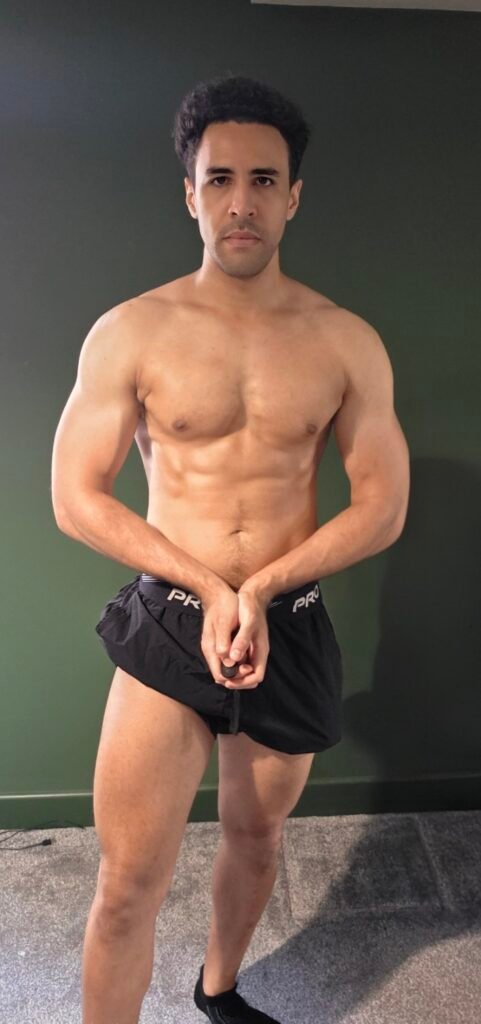
I’m not going to tell you that a list of exercises cures sciatica. I’m not qualified to and it wouldn’t be true. What I can tell you is exactly what I did, in what order, and what each stage felt like — because I wrote it all down while it was happening.
Why the advice here is specific
I keep a training log. It currently runs to more than 170 numbered entries, most of them dated, going back years — what a movement felt like, which cue finally made it click, what was sore the next morning and what that turned out to mean.
That log is where the posts on this site come from. When I tell you what you should feel in a Romanian deadlift, it’s because I’ve got notes on the session where I first felt it, and the several before it where I didn’t.
That’s the whole proposition. Not qualifications, and not theory I’ve read and repackaged — the specifics of having done it, kept records, and got it wrong a few times first.
What this site is for
Fit Fuel Daily teaches the fundamentals and how to progress them, for people who are new to training or early in it. The basics, in the right order, explained by someone who had to work them out mostly alone and would rather you didn’t have to.
If you’re starting out, how to structure your workouts as a beginner is the practical place to begin, and setting fitness goals will help you point the effort somewhere.
Training gave me a back that works, two lifts I’d written off, and a way of approaching problems that has held up outside the gym. It also gave me a career I’m building on my own terms, which is what this site is.