
The forward lean in most squats is not a technique problem. It is an ankle problem. The ankle does not have enough range to let the torso stay upright, so the torso tips forward to find depth. The body is solving a geometry problem — the lean is the solution, not the mistake.
The heel elevated squat changes the geometry. When the heels sit higher than the toes, the ankle range the movement requires drops. The torso stays upright without fighting for it. The quads take the load they were always supposed to take.
What Is a Heel-Elevated Squat?
A heel elevated squat is a squat variation where your heels are raised on a plate or wedge, allowing your torso to stay more upright and your knees to travel further forward. It places more demand on the quads than a flat-footed squat and is useful for anyone whose ankle mobility limits their depth or whose upper body leans forward excessively when squatting.
What you need: Weight plates, a heel wedge, or a slant board (plus a barbell or dumbbells if adding load).
This is a squat movement — your knees and hips bend together to lower and raise your body, the same motion you use standing up from a chair.
Who This Is For
Someone who has been told to stay more upright in their squat and cannot — the cue makes sense but the body does not follow it when the heels are flat and the ankles are tight.
Someone who feels more in their lower back and hips than in their quads at the bottom of a squat. That is not always a strength problem. It is often a geometry problem.
Someone who has been working on ankle mobility and wants to train quad strength in the upright position before the mobility fully carries over.
Someone who wants to understand what their squat is supposed to feel like — before they have the ankle range to feel it on flat ground.
Someone who has tried it once, noticed the squat felt immediately easier, and did not yet understand why. That ease was diagnostic. It was showing you where the limit was.
How To Do It
How Many Sets and Reps?
- Sets: 3
- Reps: 8–12
- Rest: 60–90 seconds between sets
- Load: a goblet hold or light barbell
Progress the load before the range — when the movement stops being challenging, add weight before you reduce the heel elevation. The goal is quad strength at the bottom, not getting rid of the elevation as fast as possible.
The elevation. Use two weight plates (2.5kg or 5kg) placed side by side, a purpose-built heel wedge, a slant board, or weightlifting shoes.. The heels need to sit roughly 2–3cm higher than the toes.
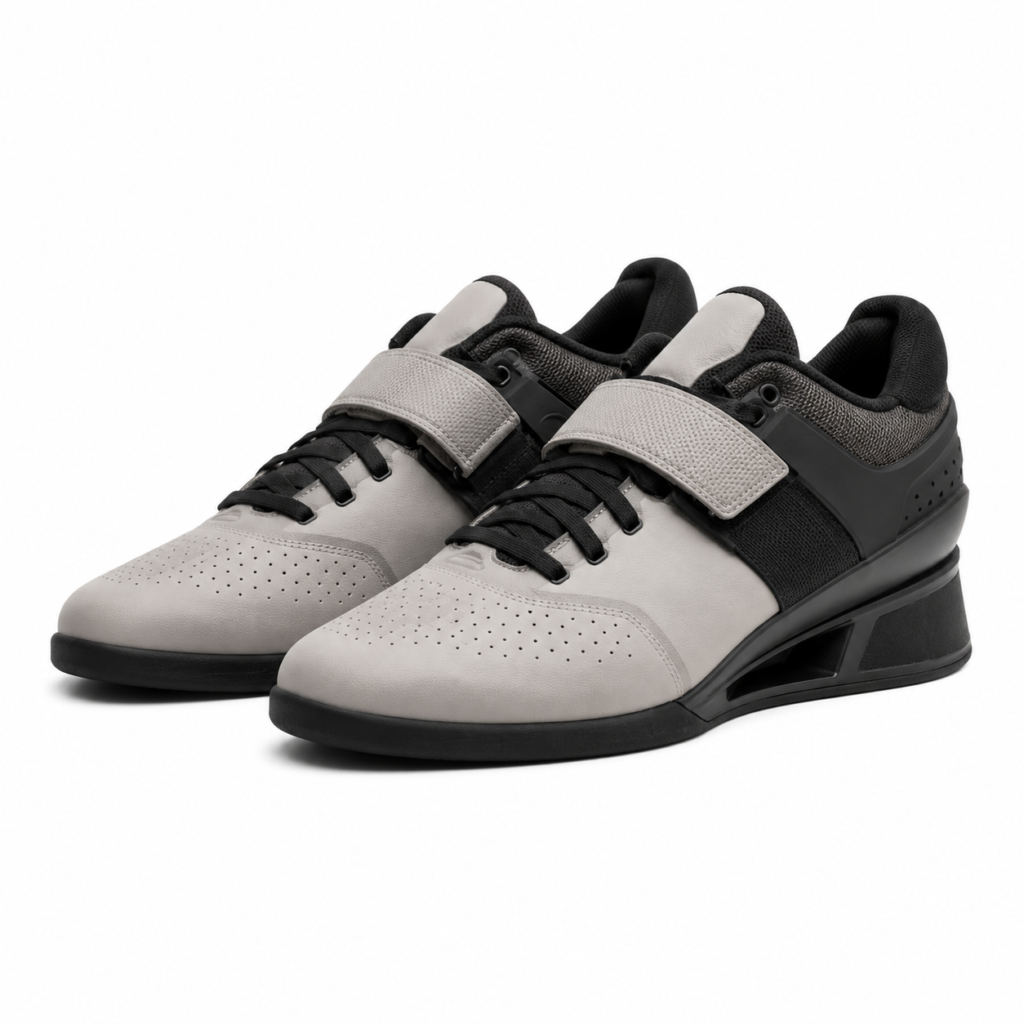
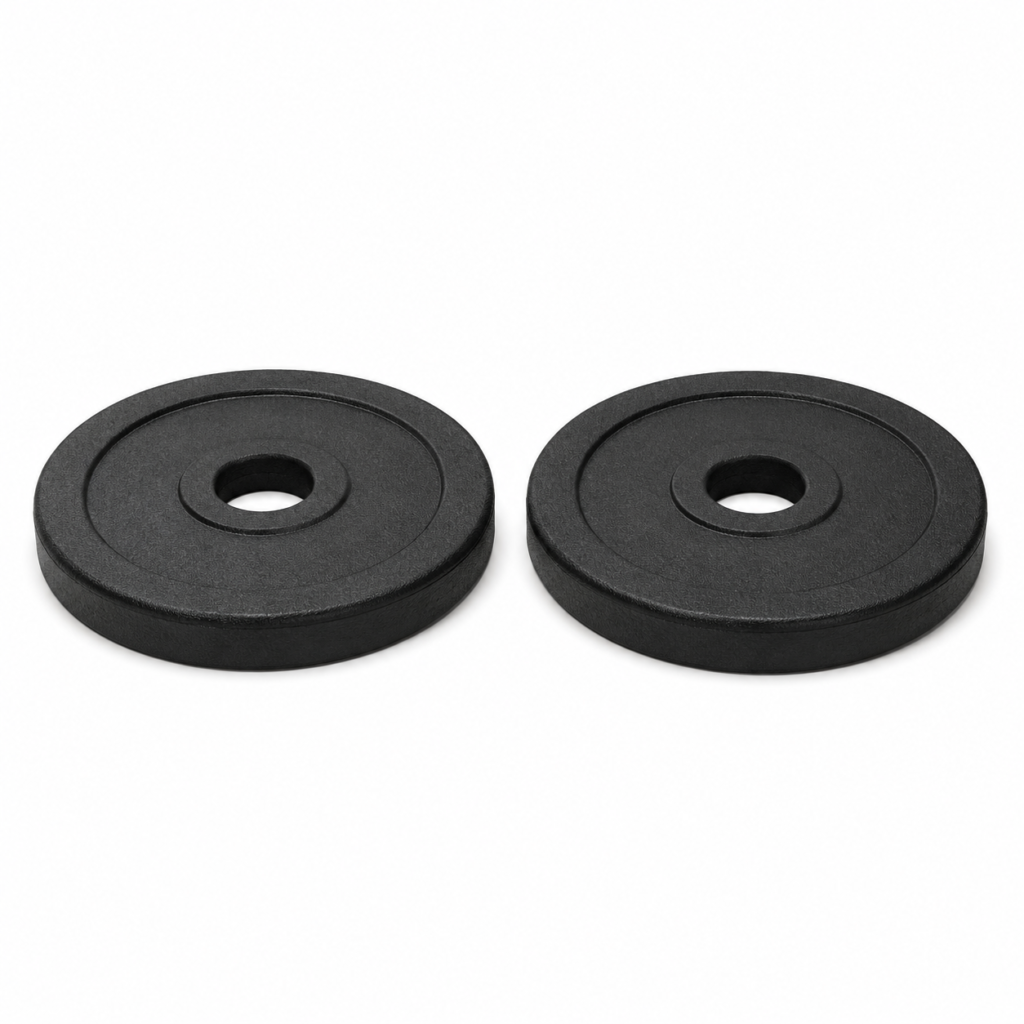
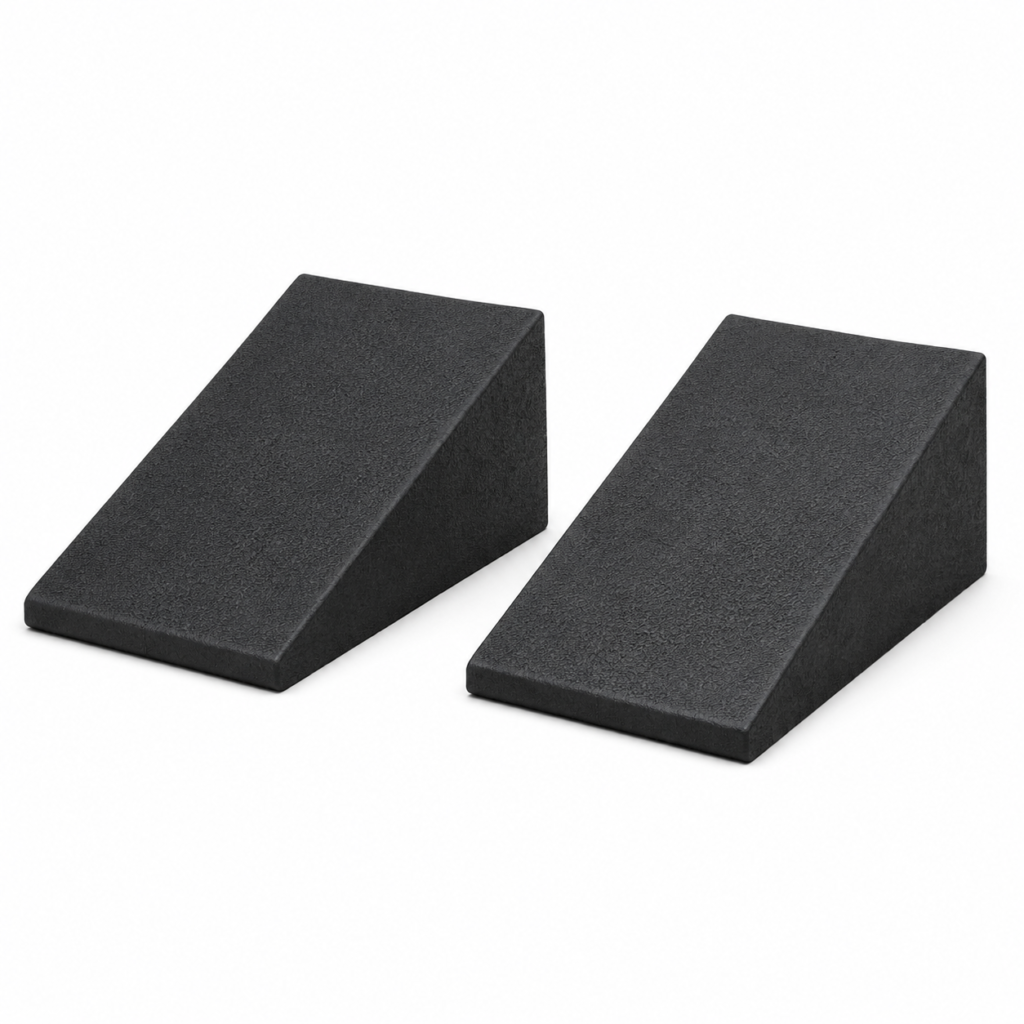
Foot position. Hip-width, toes turned out slightly — the same as a regular squat. The elevation is the only change.
The descent. The hips drop straight down. This is the main difference from the box squat and from most standard squat coaching. The torso stays upright, the knees travel forward over the toes, and depth comes from the quads loading at the bottom.
At the bottom. The quads are fully loaded — the front of the thigh is doing the work. Keep the full foot in contact with the plates.
The drive. Push straight up. The knees track over the toes. The torso holds the same upright position it held at the bottom.
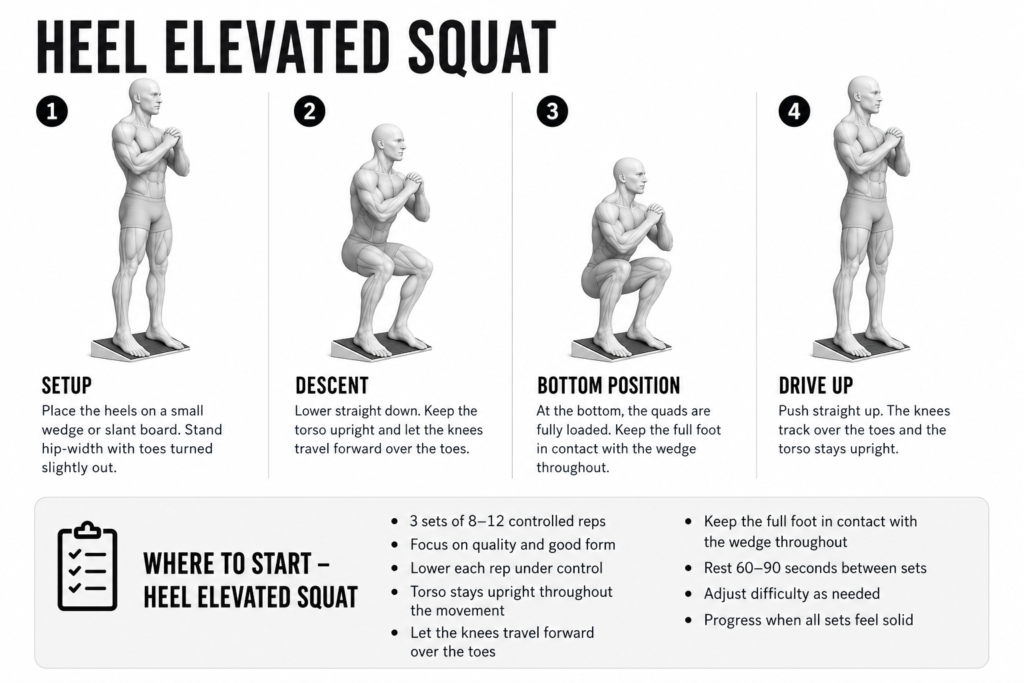
- Lower straight down — the torso stays upright through the whole movement
- Let the knees travel forward over the toes
- Keep the full foot in contact with the plates throughout
What You Should Feel
The quads — directly, clearly, at the bottom. Not the hips, not the lower back. The front of the thigh is the primary thing being loaded, and the elevation removes enough of the competing demands that you cannot miss it.
The upright torso should feel like less effort than expected. The position comes from the geometry, not from fighting to hold it.
If you feel the lower back working hard at the bottom, the elevation is not high enough. Add another plate and reassess before adding load.
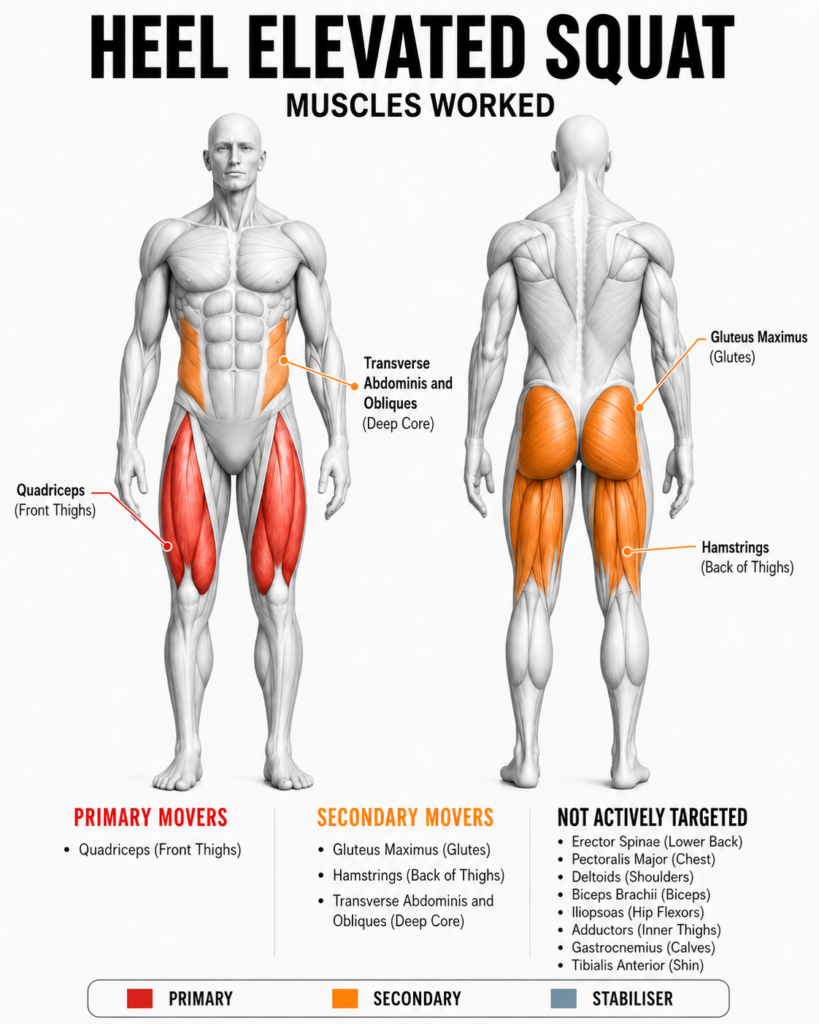
What Muscles Does the Heel-Elevated Squat Work?
Primary: quadriceps (the elevated heel shifts the movement into a range where the quads bear more of the load than in the flat-heel squat — particularly at the bottom, where they are in their most lengthened position under the highest demand)
Secondary: gluteus maximus (glutes) (active through the drive), hamstrings (back of the thighs — lengthened more than in a flat-heel squat at the same depth), transverse abdominis and obliques (the deep core muscles that brace the spine under load)
What Are Common Heel-Elevated Squat Mistakes?
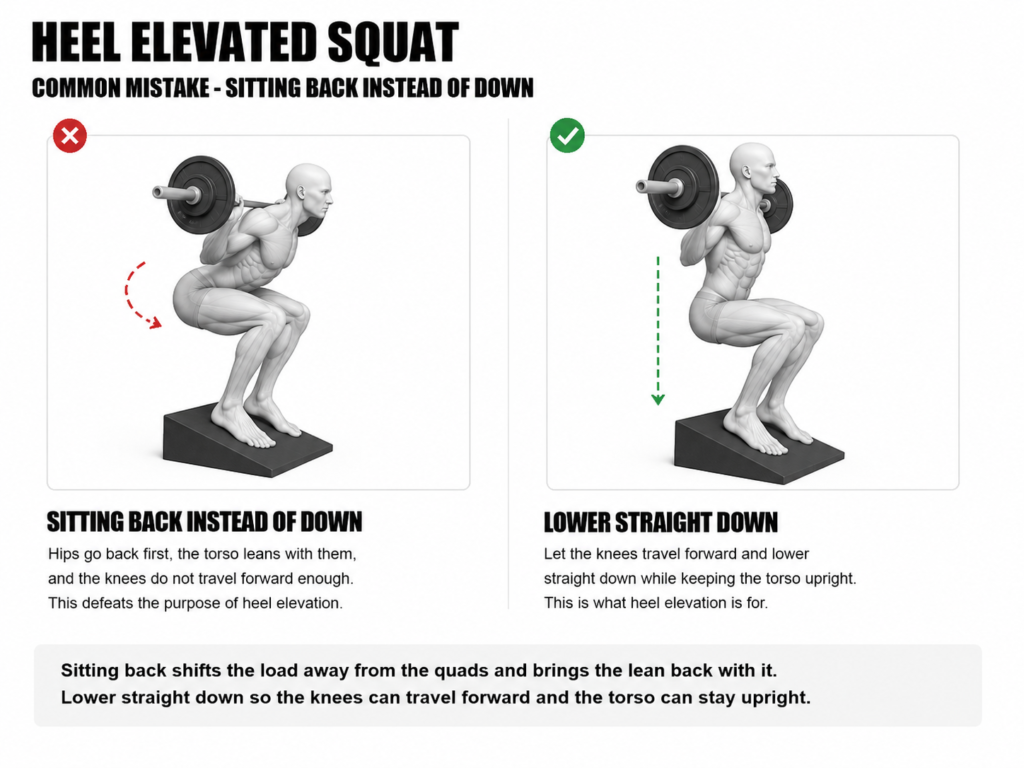
Sitting back instead of down
The pattern from flat-heel squatting is to push the hips back first. With heels elevated, this defeats the purpose — the elevation exists to let the knees travel forward and the torso stay upright. If the hips go back, the lean comes back with them. Lower straight down. The movement feels unfamiliar at first, especially if back-dominant squatting is the habit.
Elevation too low
A single thin plate under each heel does not change the geometry enough to make a real difference. The elevation needs to be substantial enough to actually reduce the ankle demand. Two plates, a proper wedge, or a slant board — something that puts the heels clearly above the toes.
Heels rocking off the plates
The stance is too narrow to hold balance as the knees travel forward over the toes — there isn’t enough base under the new movement pattern for the foot to stay flat. Widen the stance slightly. If the rocking continues, the load is ahead of where the strength currently is, or the elevation itself needs to go up before going back down.
Benefits
The quads get stronger in the position where the regular squat rarely trains them. On flat heels with limited ankle mobility, the load stays in the mid-range where it is easier to manage. The heel elevated squat puts load at the bottom, where it is hardest. When that gets stronger, the regular squat has more to work with at depth.
Why It Transfers
The forward lean in a flat-heel squat is not always a strength problem. Often it is a mobility problem that looks like a technique problem. The heel elevated squat separates the two — it lets you train the quad strength at the bottom without the ankle range being what limits you.
When ankle mobility improves, through specific work or through time, the strength built in the elevated position is already there. The torso stays more upright without being told to. The quads take more of the load. The squat starts to look the way it is supposed to look.
The lean was never the problem. The lean was the symptom. Train what the lean was hiding.
How To Programme It
As a squat warmup:
Bodyweight or a light goblet hold, before the main squat session. Gets the quads activated in the upright position before loading the barbell.
As a quad accessory:
After main squats. Use a goblet hold or light barbell. When the movement is no longer challenging, add load before reducing elevation. The goal is quad strength at the bottom — not removing the elevation as fast as possible.
Where This Fits
The heel elevated squat sits alongside the Barbell Back Squat as an accessory to it — specifically for the upright torso and quad loading that the flat-heel squat does not reliably train until ankle mobility is in place. It targets a different weakness than the Box Squat — that is about the drive out of the bottom, this is about the position at the bottom and the quad strength within it. The two run well together.
It works alongside ankle mobility work, not instead of it. The elevation is a tool that lets you train the strength while the mobility catches up.
Drop a comment if the position revealed something about where your regular squat has been hiding load — and what changed when you went back to the flat heel.