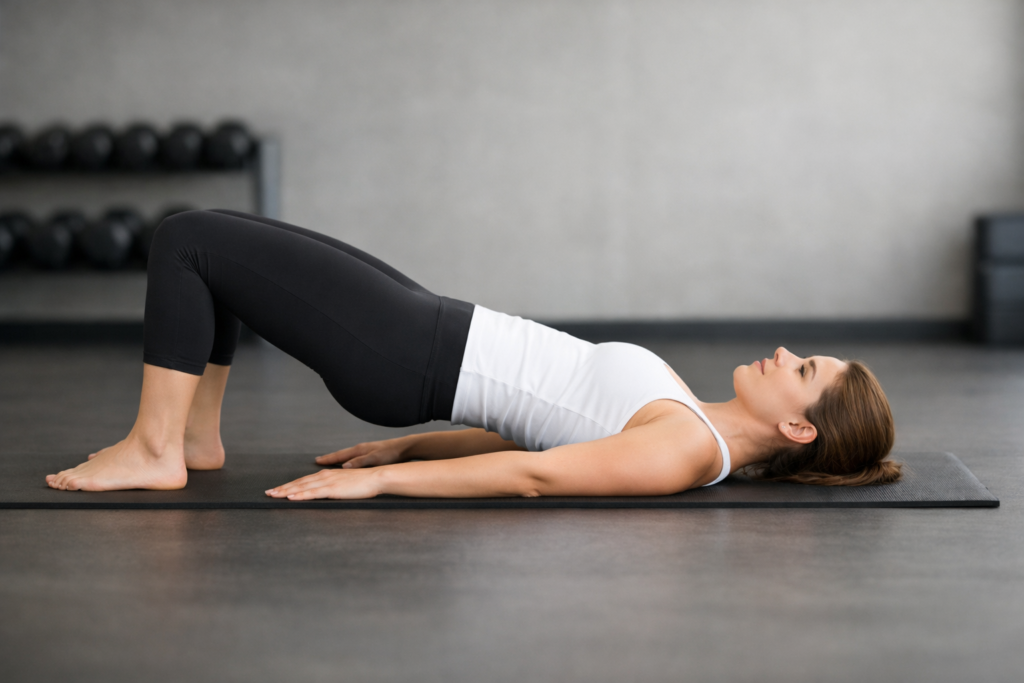
The glute bridge is one of the simplest lower-body exercises — and one of the most important for beginners.
It teaches the body how to extend the hips using the glutes, instead of relying on the lower back or hamstrings to compensate. When this pattern is missing, strength elsewhere becomes unstable no matter how hard you train.
This movement isn’t about intensity or loading.
It’s about building a clean, reliable foundation that every lower-body movement depends on.
If you’re new to training and want to understand how this exercise fits into a simple beginner routine, see this guide on how to structure your workouts as a beginner.
What Is a Glute Bridge?
A glute bridge is a hip extension exercise where you lie on your back, push through your heels, and drive your hips toward the ceiling. It trains the glutes and hamstrings without loading the spine, making it one of the safest starting points for posterior chain work.
What you need: Nothing for the floor version — a bench for the elevated hip thrust progression.
This is a hinge movement — your hips bend backward while your knees stay mostly soft, the same motion you use bending down to pick something off the floor.
Glute Bridge (Floor)
Sets & Reps
- 2–4 sets
- 10–15 controlled reps
- Pause briefly at the top of each rep
- 30-60 second rest, allowing more time if needed
Focus on control rather than speed. Each rep should look the same.
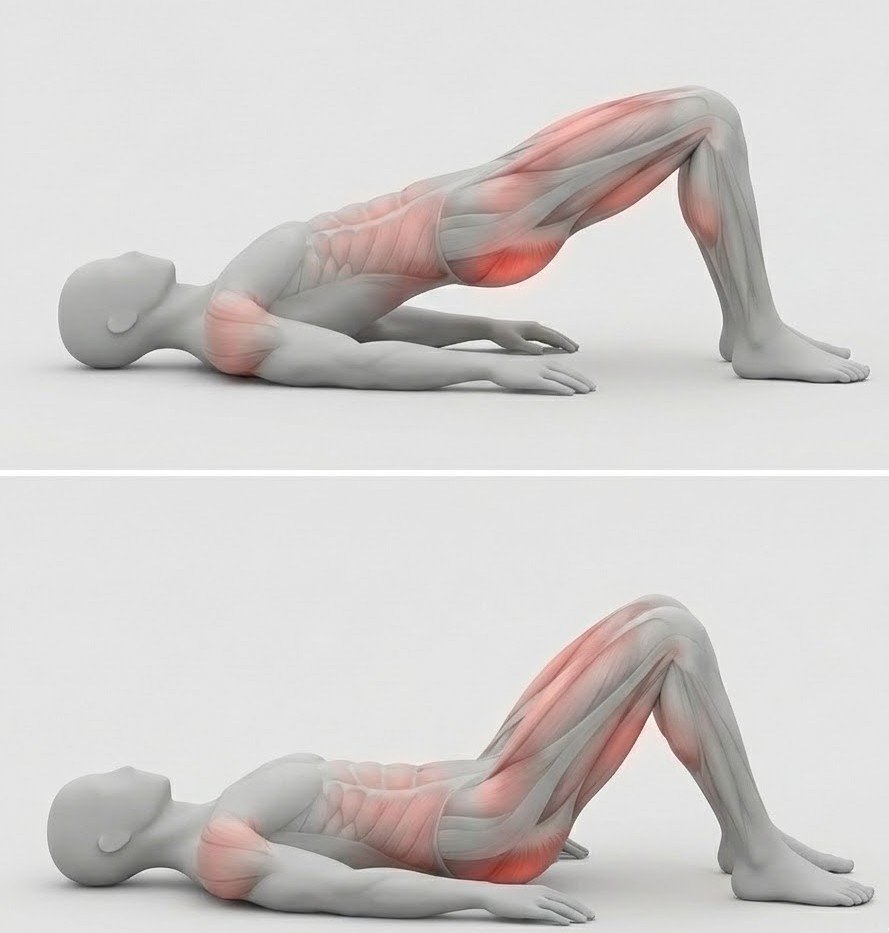
Key Points to Pay Attention To
- Keep your feet flat on the floor with pressure through the heels
- Knees stay stable and track naturally — don’t let them fall inward
- Lift the hips by extending them, not by arching the lower back
- Keep the ribs down as the hips rise
- Move slowly enough that you can control both the lift and the lower
What You Should Feel
- A strong contraction in the glutes at the top of the movement
- Light engagement through the core to stabilize the pelvis
- Minimal involvement from the lower back
- No tension in the neck or shoulders
If you feel this mostly in your lower back or hamstrings, slow the movement down and slightly reduce the range.
Who This Is For
- Beginners learning lower-body movement patterns
- Anyone rebuilding strength after time off or injury
- People who feel lower-back strain during squats or hinges
- Those looking to improve hip stability and control
Why This Movement Matters
The glute bridge teaches proper hip extension — one of the most important movement patterns in lower-body training.
When the glutes can extend the hips cleanly, the body relies less on the lower back and compensatory muscles. This improves stability, reduces unnecessary strain, and creates a stronger foundation for movements like squats, hinges, running, and everyday tasks.
For beginners, this exercise isn’t about intensity. It’s about teaching the body how to move correctly before adding complexity.
Key Takeaway
The glute bridge teaches the body how to extend the hips cleanly — a foundation every lower-body movement depends on.
Hip Thrust (Elevated)
Sets & Reps
- 2–4 sets
- 8–12 controlled reps
- Brief pause at the top of each rep
- 60–90 seconds rest, allowing more time if needed
Treat this as a progression of the floor glute bridge, not a different movement.
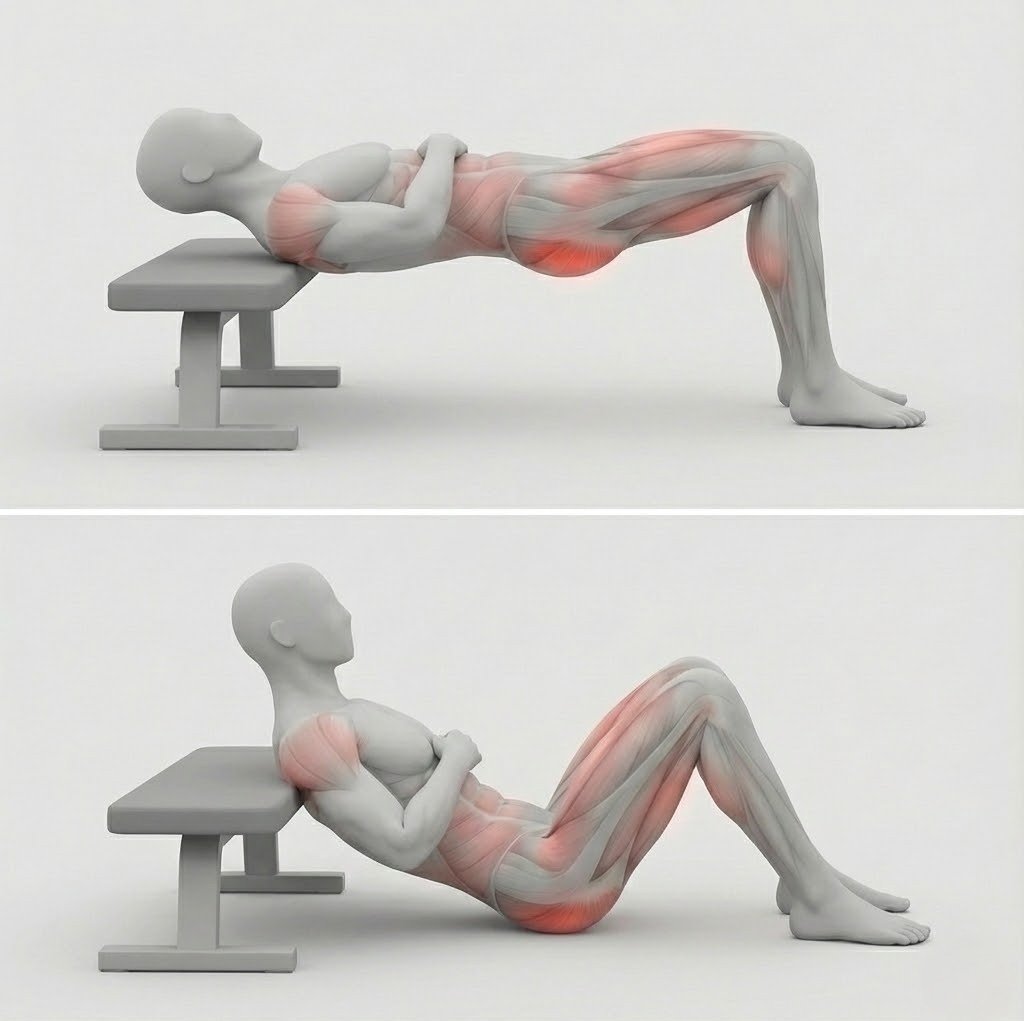
Key Points to Pay Attention To
- Upper back supported comfortably on the bench or surface
- Feet flat on the floor with pressure through the heels
- Knees remain stable and track naturally
- Extend the hips fully without arching the lower back
- Keep the ribs down as the hips rise
- Control both the lift and the lower
What You Should Feel
- Strong glute contraction at the top of the movement
- Increased range of motion compared to the floor version
- Light core engagement to stabilize the pelvis
- Minimal strain in the lower back
If you feel pressure in the lower back, reduce the range slightly and slow the reps down.
Who This Is For
- Beginners ready to progress from the floor glute bridge
- Those looking to increase hip extension strength
- Anyone preparing for loaded hinge movements
- People wanting more glute engagement without spinal stress
Why This Movement Matters
The elevated hip thrust builds on the same hip extension pattern taught by the floor glute bridge, but through a larger range of motion.
This allows the glutes to produce more force while keeping the spine stable. As a result, strength developed here transfers well to squats, hinges, sprinting, and everyday lifting tasks.
Used correctly, this movement bridges the gap between basic activation and more demanding lower-body exercises.
Key Takeaway
The hip thrust reinforces clean hip extension through a greater range — building strength without sacrificing control.
What Muscles Does the Glute Bridge Work?
The glute bridge trains your glutes and hamstrings, teaching your hips to extend through the glutes instead of the lower back.
Where This Fits
The glute bridge is a foundational movement — but it works best when it’s part of a simple, consistent routine rather than something you do in isolation and forget about.
What makes this exercise valuable isn’t just the glute activation. It’s that it teaches your hips to extend cleanly under control, which carries over directly into squats, hinges, running mechanics, and everyday movement. That’s why it shows up early in most beginner programs — it builds the kind of body awareness that makes everything else easier.
Once that hip extension feels controlled and consistent, the next step in the hinge progression is the dumbbell Romanian deadlift — it builds on the same pattern, with the added demand of holding a neutral spine through a longer range of motion under load.
If you want to understand how the glute bridge fits alongside other foundational movements, The 3 Pillars of Fitness: Nutrition, Training & Mindset for Beginners gives you the full picture — where training sits within a bigger framework, and why each piece matters. It’s a useful reference if you’re just getting started and want to see how it all connects.
For the training side specifically, How to structure your workouts as a beginner is worth reading once you’ve got this movement dialed in. It shows you how to build a simple, sustainable routine around exercises like this one — without overcomplicating it.
And if you’re pairing lower-body work with core training, the side plank is a natural companion. It targets lateral stability in a way the glute bridge doesn’t, and together they cover a lot of ground for a beginner.
It’s also the first movement reached for in our sciatica recovery framework — when load through the spine has to stay at zero, the glute bridge is simple and safe enough to start training the glutes from day one.
Finally, don’t overlook what happens after training. If you’re putting in consistent effort, Why Recovery Matters: Where Strength Is Actually Built explains why rest isn’t optional — it’s where the adaptation actually happens.