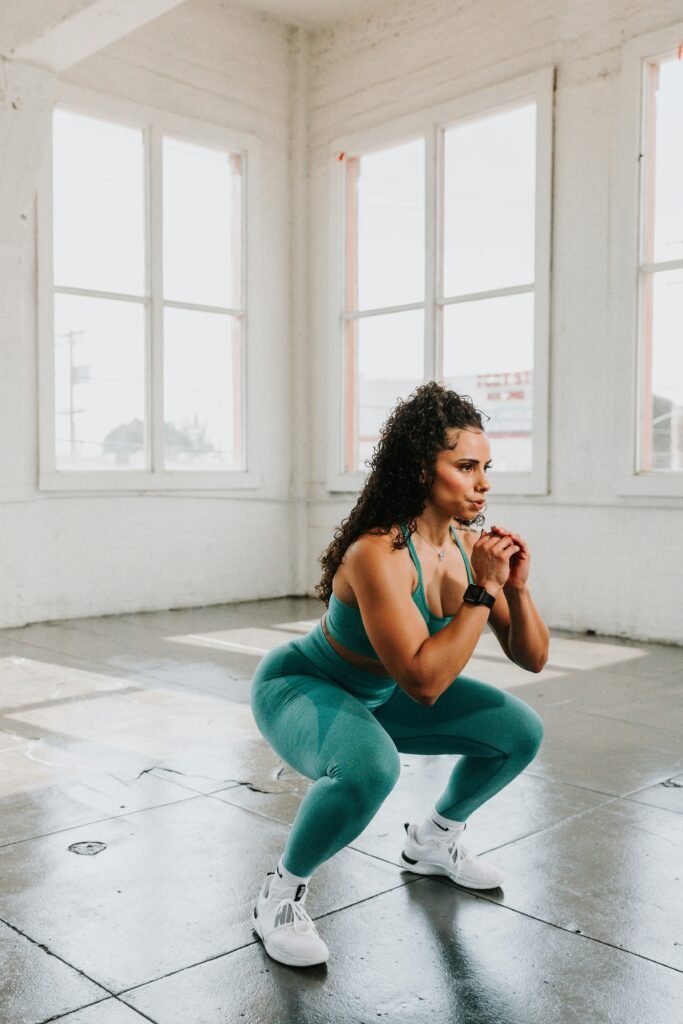
Learning how to squat properly is one of the most valuable movement skills you can develop. A good squat strengthens your legs, glutes, and core, improves how you move in daily life, and helps protect your joints over time — but only if it’s done with control and good form.
This guide focuses on clear, practical guidance to help you understand the movement, recognise good-enough form, and build confidence in your squat. It teaches the basic bodyweight squat step by step, showing how to stand, how to position your feet, and how to move through the squat comfortably and safely.
🏋️♂️ Why Squats Matter (Especially for Beginners)
Squats aren’t just a “leg exercise.” They’re one of the most useful movements you can learn because they train multiple muscles at once and translate directly into everyday life.
Here’s what you get from building a strong squat:
✔ Full-body strength in one movement
Squats train your quads, hamstrings, glutes, core, and even your upper body for stability. You get more return for your effort than almost any other exercise.
✔ Better mobility and flexibility
Learning to squat deep improves hip, ankle, and thoracic mobility — all of which help you move better and reduce stiffness in daily life.
✔ A stronger, more resilient lower back
When done correctly, squats teach your core and spine to stabilise safely under load. This carries over to lifting, walking, running, and even sitting comfortably.
✔ Builds confidence under controlled challenge
Squatting is empowering. Beginners often go from “I can’t do this” to “I can’t believe how strong I am now.”
✔ A Foundational Movement For Strength Training
Squats appear across strength training, bodybuilding, and athletic performance because they develop strength, coordination, and control. Learning the basic squat well gives you a solid base for whatever training you choose to do.
The Basic Bodyweight Squat: Step-By-Step
Below is a simple visual breakdown of the bodyweight squat.
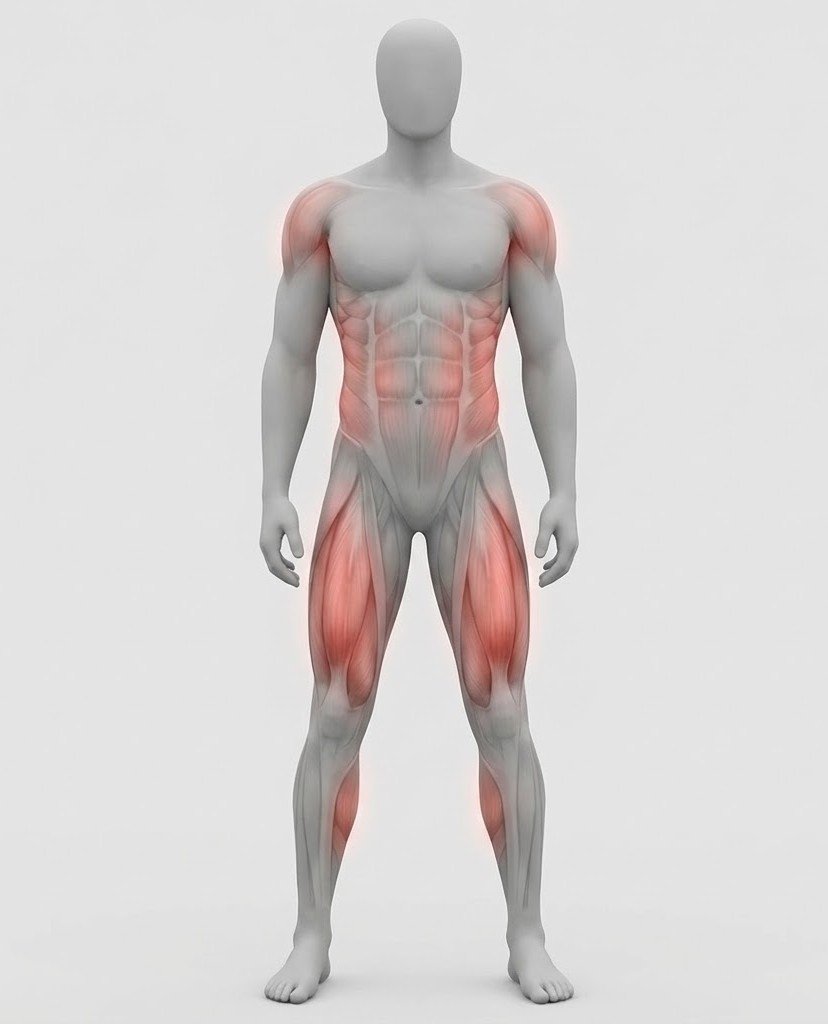
This is your starting position. Stand relaxed but upright, with your weight evenly balanced across both feet. This stance gives you a stable base before you begin the squat.
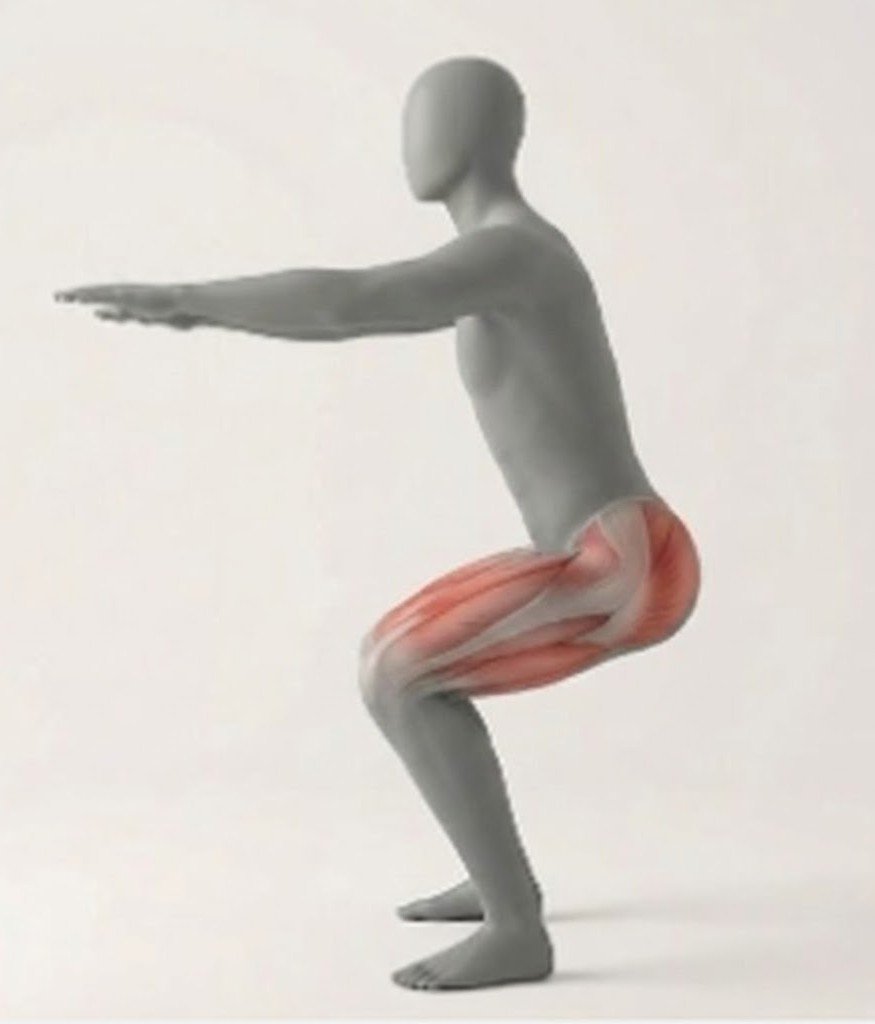
Begin the squat by letting your hips move down and slightly back as your knees bend. Keep your chest upright (raising your arms can help with this) and your spine neutral. Think about sitting between your hips rather than dropping straight down. Lower yourself only as far as feels comfortable, keeping your heels grounded.
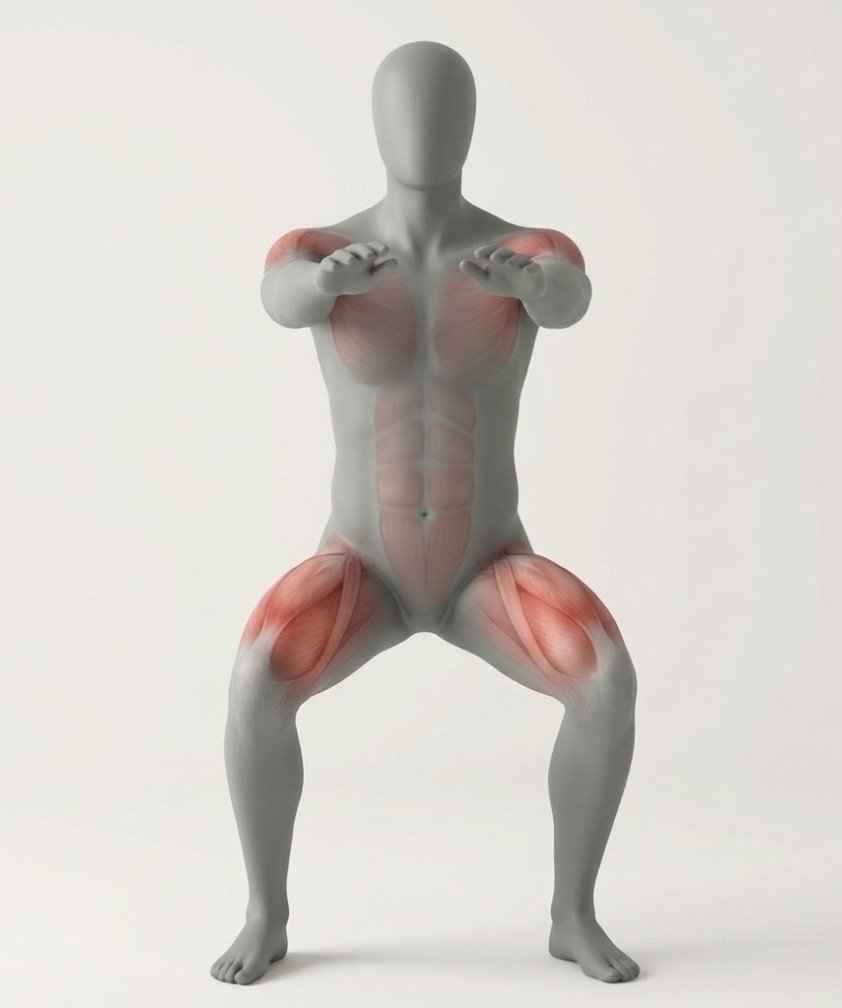
From the front, notice how the knees move in line with the feet as you squat. A slight outward movement is normal and helps maintain balance and comfort. Focus on staying controlled and symmetrical rather than forcing your knees into a specific
position.
While squat depth and torso angle can vary between individuals, maintaining a neutral, controlled spine and a balanced movement is important for everyone.
How to Practise the Squat: Sets, Reps, and Focus
When you’re learning a new movement, the goal is not to do as much as possible. The goal is to practise the movement well.
A simple place to start is:
- 2–3 sets
- 5–10 controlled repetitions per set
Each repetition should be performed with steady intent. Move at a pace that allows you to stay balanced, feel the movement, and maintain control from start to finish.
Listen to How Your Body Responds
As you squat, pay attention to how your body feels rather than forcing a specific position or number of repetitions. or number of repetitions. If something feels uncomfortable or strained, adjust your stance or reduce the range of motion.
Your body adapts to what you practise. Moving with control and awareness teaches your body how the squat should feel and function.
Quality Comes Before Quantity
When starting a new exercise, quality matters more than volume. It’s better to perform fewer repetitions with good control and comfortable depth than to rush through more repetitions with poor form.
Over time, as the movement becomes easier and more natural, your repetitions will increase on their own. This is how progress happens — through consistent, well-practised movement rather than pushing limits too early.
Common Things to Watch For
As you practise the squat, a few patterns tend to show up. These aren’t mistakes — they’re simply things to notice as you learn the movement.
Rushing the Movement
If repetitions start to feel hurried, slow down. Moving too quickly often reduces control and balance. A steady pace helps you stay aware of how your body is moving through each part of the squat.
Forcing Depth
There’s no need to push lower than your body comfortably allows. Depth will improve naturally with practice. Focus on staying balanced and controlled rather than reaching a specific position.
Losing Balance
If you feel yourself tipping forward or shifting onto your toes, pause and reset. Keep your weight comfortably distributed through your feet and take your time between repetitions.
Letting Control Slip at the Bottom
The bottom of the squat should feel stable, not rushed. If you find yourself dropping quickly or bouncing out of the movement, reduce the depth slightly and regain control.
Tension Where It Shouldn’t Be
Some muscle effort is expected, but sharp discomfort or unnecessary tension is a signal to adjust. Change your stance slightly or shorten the range of motion and continue practising within a comfortable zone.
How the Squat Should Feel
A good squat should feel controlled and balanced from start to finish. You should feel steady on your feet, with the movement flowing smoothly rather than rushed or forced.
As you lower and stand back up, the effort should feel shared across your legs, hips, and core rather than concentrated in one uncomfortable area. A mild sense of muscular effort is normal, but the movement itself should feel stable and repeatable.
You shouldn’t feel strain, sharp discomfort, or a need to force your body into position. If something feels off, adjust your stance or depth and continue within a range that feels natural.
Over time, as the movement becomes more familiar, the squat will start to feel easier and more confident. That sense of comfort and control is a good sign that your body is adapting in the right way.
Why Squatting Is Worth Practising
For me, the squat became important not because of how much weight I could lift, but because of how it changed the way my body moved and felt day to day.
Spending time practising the squat helped me develop better awareness of my posture, balance, and control. Movements that once felt awkward or unstable — like lifting, standing up, or carrying weight — started to feel more natural and coordinated.
What makes the squat valuable is that it trains your body to work as a connected system. Your legs, hips, and core learn to move together, rather than as separate parts. Over time, this improves overall strength, stability, and confidence in movement — even outside of exercise.
These benefits aren’t limited to the gym. Squatting well supports everyday tasks, helps maintain joint health, and encourages efficient movement patterns that carry over into daily life.
Muscles Worked and Physical Benefits
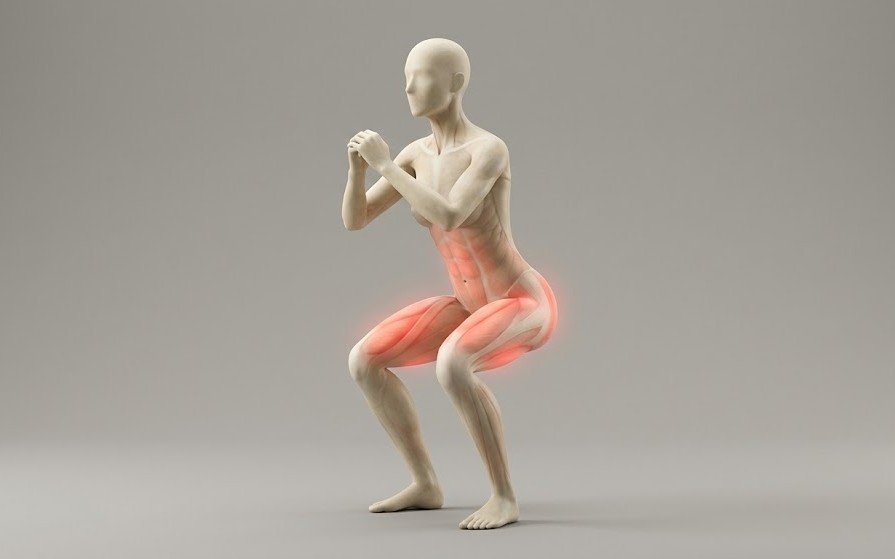
The squat targets several major muscle groups at the same time, which is part of what makes it such an effective movement.
The primary muscles involved are the quadriceps, which do most of the work as you bend and straighten your knees. Alongside them, the glutes and hamstrings support hip movement and help control the descent and drive you back up. Your core works throughout the movement to stabilise your spine and maintain balance.
Because so many large muscles are involved, the squat develops strength, coordination, and shape across the lower body rather than isolating one area at a time. For those looking to improve quad development, build stronger glutes, or create better overall lower-body shape, the squat is one of the most efficient exercises you can practise.
Beyond muscle development, the squat trains your body to move as a connected unit. With a single movement, you are teaching a large portion of your body to work together — supporting better posture, balance, and movement quality overall. In practical terms, you are improving how much of your body functions well, not just how it looks.
How This Applies to You
No matter your starting point, learning to squat in a way that feels comfortable and controlled gives your body a reliable movement pattern it can build on. As your strength and awareness improve, other movements often feel easier too.
You don’t need to chase depth, weight, or performance goals to experience this. Practising the squat with control and consistency is enough for most people to feel meaningful improvements over time.
The value of the squat isn’t in how impressive it looks — it’s in how it supports your body’s ability to move well.
Your Turn
If you’re practising the squat or working on improving your movement, feel free to leave a comment below. Whether you’re just starting out or refining your form, sharing your experience can help others who are learning too.
If you’d like to understand how squatting fits into a bigger picture, you may also find this helpful:
The 3 Pillars of Fitness: Nutrition, Training & Mindset
Learning to move well is one part of building a strong foundation. Consistency, recovery, and mindset matter just as much.