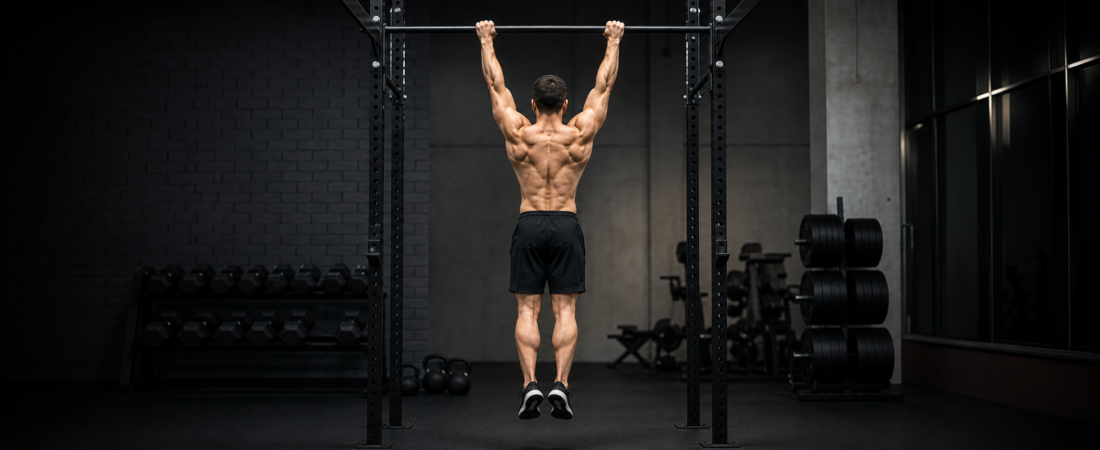
Scapular pull-ups build a skill that carries straight into every pull-up that follows: the ability to pull the shoulder blades down and together before the elbows bend at all. That single skill is what turns a pull-up into a movement driven by the back instead of the arms — the difference the first few inches of every rep depend on.
The exercise looks almost too small to matter: hang from a bar with straight arms, then lift the body a few centimetres using only the shoulder blades. No elbow bend, nothing that looks like a full set. But that small range is exactly where a real pull-up begins, and training it in isolation is what makes it happen automatically once load gets added.
What Is a Scapular Pull-Up?
A scapular pull-up starts from a full dead hang, arms completely straight. Without bending the elbows at all, the shoulder blades pull down and slightly together — depressing and retracting the scapula — which lifts the body a small amount through that shoulder-blade movement alone. That lift is driven almost entirely by the lower traps. Release back to a relaxed hang and repeat.
This is what separates it from a partial pull-up: the arms never move. If the elbows bend even slightly, the exercise has turned into something else — it isolates the exact movement that should happen automatically at the start of every real pull-up.
What You Need
A pull-up bar you can hang from with straight arms and both feet off the ground. No band or added equipment needed for the core movement — this is a bodyweight-only drill.
How To Do It
Hang from the bar at shoulder-width or slightly wider, arms fully straight, body relaxed. In this passive hang, the shoulders naturally creep up toward the ears — that’s the starting position, not a fault to fix yet.
From there, without bending the elbows at all, pull the shoulder blades down and slightly together. The body lifts a small, visible amount — a few centimetres — as the scapula depresses and retracts. Hold briefly at the top, then lower back to the relaxed hang under control before the next rep.
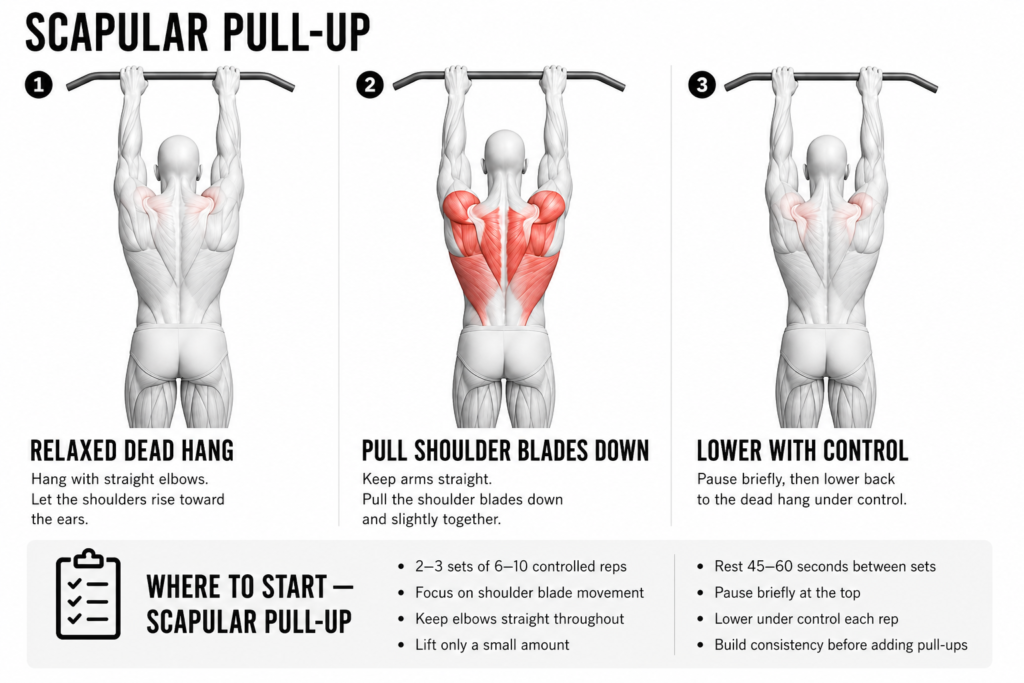
- Arms stay completely straight throughout — any elbow bend means the movement has turned into a partial pull-up
- The lift is small — a few centimetres, not a pull-up’s range
- Let the shoulders fully relax and rise at the bottom of each rep before pulling again
- The movement comes entirely from the shoulder blades, not the arms or a body swing
What You Should Feel
A distinct pull low in the back, between and just below the shoulder blades, rather than anything in the arms or grip. Letting the head and neck settle back slightly while the ribs stay tall often makes that pull click into place almost automatically — the position itself seems to trigger the shoulder blades into the right spot without needing to think about each part separately.
If one side lifts more easily than the other, that’s common and worth noting rather than pushing through evenly — it usually means one side’s depression is stronger, or the other side is compensating, and forcing symmetry can just let the stronger side take over.
If nothing distinct is felt and the only sensation is grip fatigue, the elbows have probably started bending to help — the movement has quietly turned into a tiny partial pull-up instead of a pure scapular one.
Muscles Worked
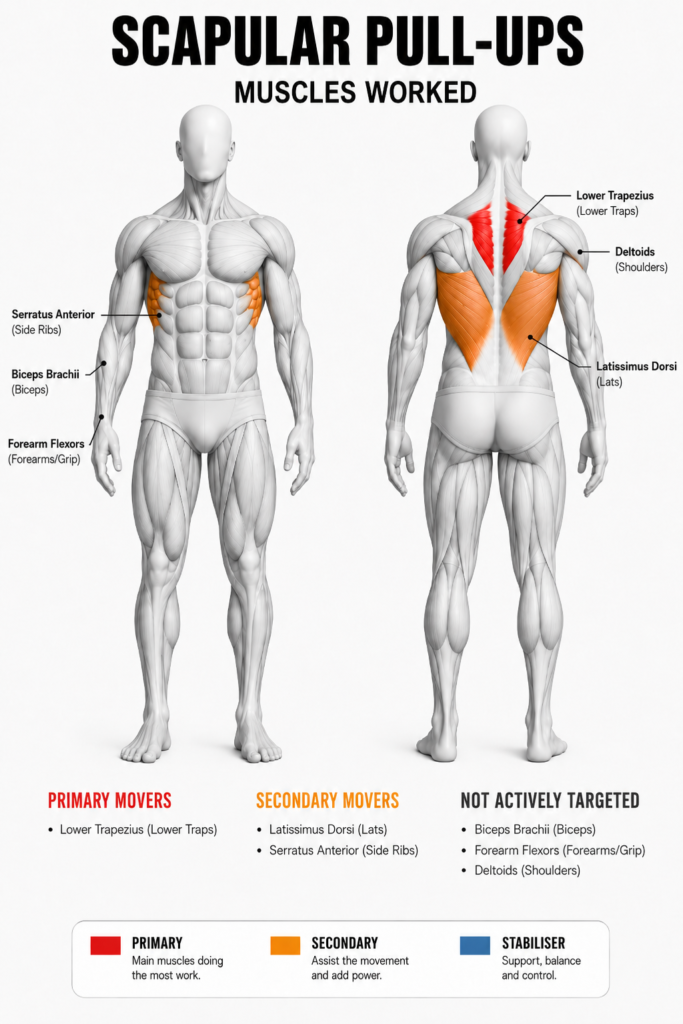
The lower traps (lower trapezius) are the primary mover — the muscle that pulls the shoulder blades down toward the hips, which is exactly the movement this exercise isolates. Most pulling exercises only ask it to help, never to lead, which is why it can stay underdeveloped for years even in lifters who row and pull-up consistently.
The serratus anterior (the muscle wrapped around the side of the ribcage, under the armpit) and the lats work as secondary support, stabilising the shoulder blade against the ribcage and assisting the small amount of depression the lower traps drive. Neither does the bulk of the work here, but both are part of what keeps the scapula moving cleanly rather than drifting during the hold.
Common Mistakes
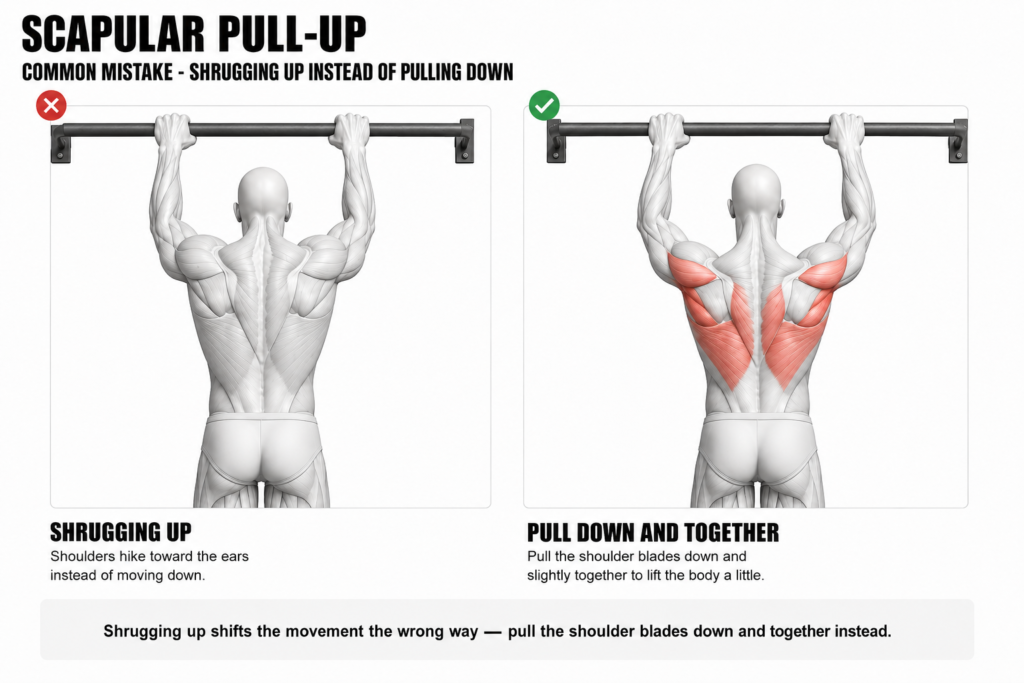
Shrugging up instead of pulling down
Hiking the shoulders toward the ears first, mistaking that for effort — but the entire movement runs the other direction. The shoulder blades pull down and together, not up.
Rushing through without a hold at the top
Treating it like a fast bounce skips the part that actually matters. The brief pause at the top is where the position gets reinforced — without it, the rep is over before the scapula finishes moving.
Gripping too hard and pulling from the hands
Squeezing the bar tightly and trying to muscle the lift through the fingers and forearms shifts the effort away from the back before the shoulder blades get a chance to do the work. The hands should just be along for the ride.
Benefits & Why It Transfers
A back that can depress the shoulder blades on command is what makes every pull-up rep start in the right place — the back initiating the pull before the elbows ever bend, instead of the arms picking up work that isn’t theirs. Pull-ups start feeling driven by the back instead of the biceps, with grip and arms fatiguing later instead of first.
Scapular pull-ups, face pulls, and band pull-aparts round out the posterior shoulder from three angles — pull-aparts and face pulls train the rear delt and rotation, while this is the only one that trains the vertical pulling initiation directly, the same skill weighted pull-ups demand from the first inch of every rep.
Outside the gym: a back that can actively depress and retract on command is what keeps posture from collapsing into rounded shoulders during long hours at a desk.
How To Programme It & Where It Fits
3 sets of 6–10 reps, holding briefly at the top of each rep — this is a control and initiation drill, not a strength or fatigue exercise. If the reps start feeling easy and mechanical, that’s the pattern becoming automatic, which is the actual goal.
Use it as a warm-up before any pulling work — weighted pull-ups and barbell rows both depend on the same scapular depression this drill isolates, priming the back to lead the pull before load gets added.
It also belongs alongside face pulls and band pull-aparts in a shoulder-health session — together the three cover rotation, horizontal retraction, and vertical initiation, the full posterior shoulder picture.
Scapular Pull-Up FAQs
What’s the difference between a scapular pull-up and a regular pull-up?
In a scapular pull-up the arms stay completely straight the whole time — the only movement is the shoulder blades pulling down and slightly together, which lifts the body a few centimetres. The moment the elbows bend, even slightly, it’s turned into a partial pull-up instead. That isolation is the point: it trains the scapular depression a real pull-up should start with, before the arms do any work.
How many sets and reps of scapular pull-ups should you do?
3 sets of 6–10 reps, holding briefly at the top of each rep. It’s a control and initiation drill, not a strength or fatigue exercise, so reps that start feeling easy and mechanical are a sign the pattern is becoming automatic — that’s the actual goal, not something to fix with more load or reps.
Where should you feel scapular pull-ups working?
A distinct pull low in the back, between and just below the shoulder blades — not in the arms or grip. Letting the head and neck settle back slightly while keeping the ribs tall often helps that pull click into place. If the only sensation is grip fatigue, the elbows have probably started bending, which quietly turns the movement into a tiny partial pull-up instead of a pure scapular one.
Do scapular pull-ups need a band or any equipment?
No — just a pull-up bar you can hang from with straight arms and both feet off the ground. It’s a bodyweight-only drill; no band or added equipment is needed for the core movement.
Join The Conversation
Can you feel which side of your back initiates the lift first? Small side-to-side differences here are common — noticing them early is a lot easier than untangling them once they show up under a loaded pull-up.