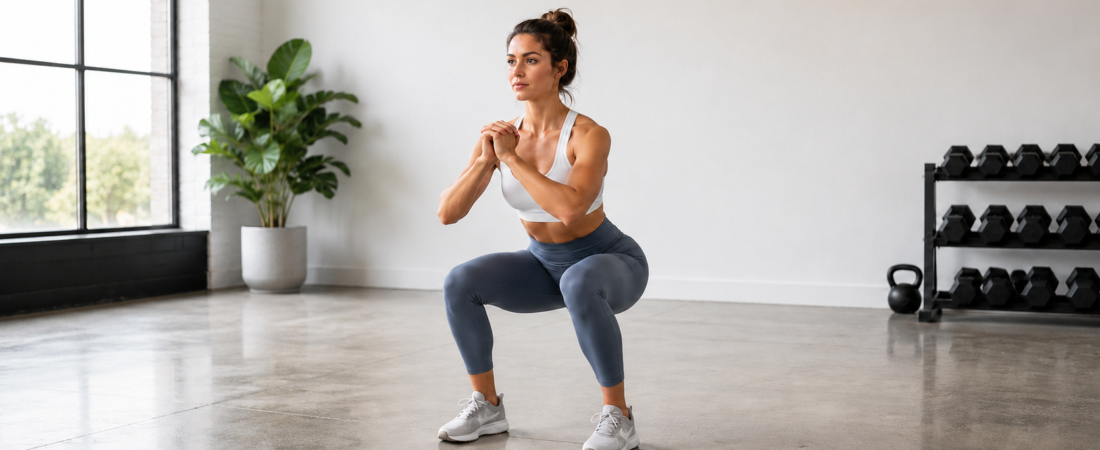
What Is This Exercise?
A bodyweight squat is a lower body exercise where you lower your hips toward the floor by bending at the knees and hips, then stand back up. It trains the quads, glutes, and hamstrings using only your bodyweight, making it the safest starting point for learning the squat pattern before adding load.
What you need: Nothing — just your bodyweight.
This is a squat movement — your knees and hips bend together to lower and raise your body, the same motion you use standing up from a chair.
How to Do a Bodyweight Squat: The Foundation of Everything
I started squatting for a simple reason. I was 25 years old and felt old. Kneeling down was uncomfortable, my legs felt weak, and being on my feet for 12 hours a day as a chef was grinding me down. I did some research and found that something as simple as 30 bodyweight squats a day could make a meaningful difference — not just to leg strength but to how your body functions overall. So I started doing them. No gym, no equipment, just the movement.
It worked. Within weeks ducking down felt easier. Climbing stairs felt easier. My legs became more resilient to the demands of a long shift. What looked like a simple exercise turned out to be one of the most useful things I’ve ever added to my routine — and it’s still the foundation everything else is built on.
The bodyweight squat is not complicated. It’s a natural human movement that almost anyone can do from day one. But natural doesn’t mean effortless, and there are things worth understanding before you start — especially if you want to use it as the foundation for everything that comes after it.
Why Squats Matter
Squats aren’t just a leg exercise. They train multiple muscle groups at once, and the carryover into daily life is immediate — the same hip and knee mechanics you’re building here are what get you up off a chair, up a flight of stairs, or back on your feet after kneeling down.
- Full-body strength in one movement — quads, hamstrings, glutes, and core all work together, with your upper body stabilizing the whole thing
- Better hip, ankle, and thoracic mobility — squatting through a full range loosens up the joints that get stiff from sitting all day
- A more resilient lower back — your spine learns to stabilize under load, which carries over to lifting, walking, and even sitting comfortably
- Confidence built through controlled difficulty — most people go from struggling with bodyweight reps to barely noticing the effort
- The foundation nearly every strength program is built on, whether you ever touch a barbell or not
Who This Is For
This is the starting point. If you’re new to training, returning after a long break, or simply want to move better and feel stronger in daily life — start here. You don’t need a gym, you don’t need equipment, and you don’t need to be fit to begin. You just need to be willing to show up consistently and let the movement do its work.
Sets & Reps
The goal at the start is not volume — it’s comfort with the movement.
When you’re just starting out:
- 2–3 sets of 10–15 reps
- Rest as long as you need between sets
- Focus entirely on control and balance — not speed
When the movement starts feeling natural:
- 3–4 sets of 20–25 reps
- Rest 60–90 seconds between sets
- Start focusing on depth and consistency
When you’re ready to push:
- 3–4 sets of 30 reps
- This is a real cardio challenge when you’re new — don’t underestimate it
- Once this feels controlled, you’re ready for the goblet squat
How To Squat — The Complete Sequence
Setup
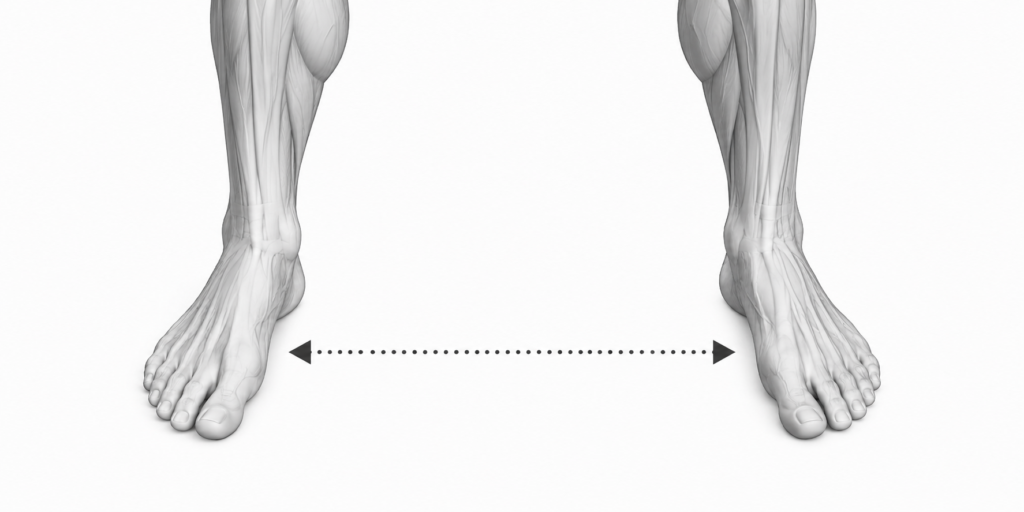
- Stand with feet roughly shoulder-width apart — experiment slightly to find what feels strongest for you
- Toes turned out slightly — around 15 to 20 degrees
- Arms straight out in front or hands clasped together for balance
- Chest up, neutral spine
The Descent
- Push your knees out in the direction of your toes
- Sit your hips back and down simultaneously — think sitting into a chair
- Keep your chest up throughout — don’t let it collapse toward your knees
- Go as deep as you comfortably can — full range of motion is the goal
- Stay controlled all the way to the bottom
The Drive
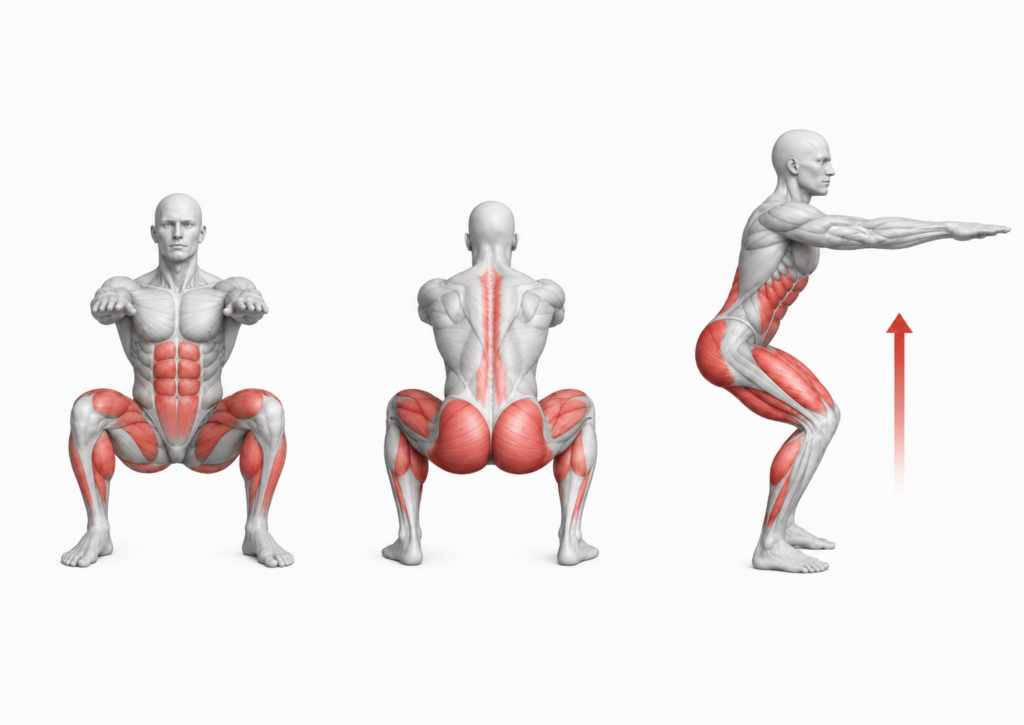
- Push the floor away and drive back up
- Keep your chest up and knees tracking over your toes
- Stand completely tall at the top
- Reset and repeat — every rep should look the same
The Detail
The setup matters more than most beginners expect. Foot width is personal — shoulder-width is the starting point but your anatomy will tell you what feels right. If your hips feel restricted or your heels want to lift, try widening slightly. The toe flare helps open the hips and makes depth more accessible. Set your feet before you start and don’t adjust between reps.
Balance is the first challenge. When you’re new to the movement the instinct is to tip forward as you descend — chest dropping, weight shifting onto the toes. Keeping your arms out in front counterbalances this and gives you something to focus on. The cue is simple: chest stays up, weight stays through the whole foot. If your heels are lifting you’re probably going too fast or too deep for where you are right now. Slow down and find the depth you can control.
Depth is worth taking seriously from the start. The common principle in strength training is to train through the full range of motion — not because it looks impressive but because it builds strength across the whole range rather than just part of it. A half squat builds half a squat. Sit into it as deeply and as controlled as you can, let the depth improve naturally with practice, and don’t rush it. Stiffness at the bottom is normal early on and it will ease with consistency.
The cardio demand surprises most beginners. Thirty bodyweight squats in a row is genuinely hard when you’re starting from nothing — your legs, your lungs, and your heart are all working at once. Start with sets of 15, build to 20, build to 25, and eventually 30. That progression happens faster than you’d expect if you show up consistently. When 30 reps for 3 sets feels manageable, you’ve built something real and you’re ready for the next step.
Common Faults and How to Fix Them
Heels lifting off the floor Usually means you’re going too deep for your current ankle mobility or you’re moving too fast. Slow the descent down and find the depth where your heels stay flat. Mobility will improve with practice.
Chest collapsing forward Keep your arms out in front and think about driving your chest up as you descend. If it keeps collapsing, reduce the depth slightly until you can maintain position.
Knees caving inward Push your knees outward in the direction of your toes throughout the movement. Caving knees usually means the glutes aren’t engaged — think about sitting out and back rather than straight down.
Losing balance at the bottom Slow down. Balance at the bottom is a skill that comes with repetition. Use your arms for counterbalance and don’t rush out of the bottom position.
Going too fast Speed hides poor form. A controlled descent and a deliberate drive back up will teach you more in ten reps than thirty rushed ones.
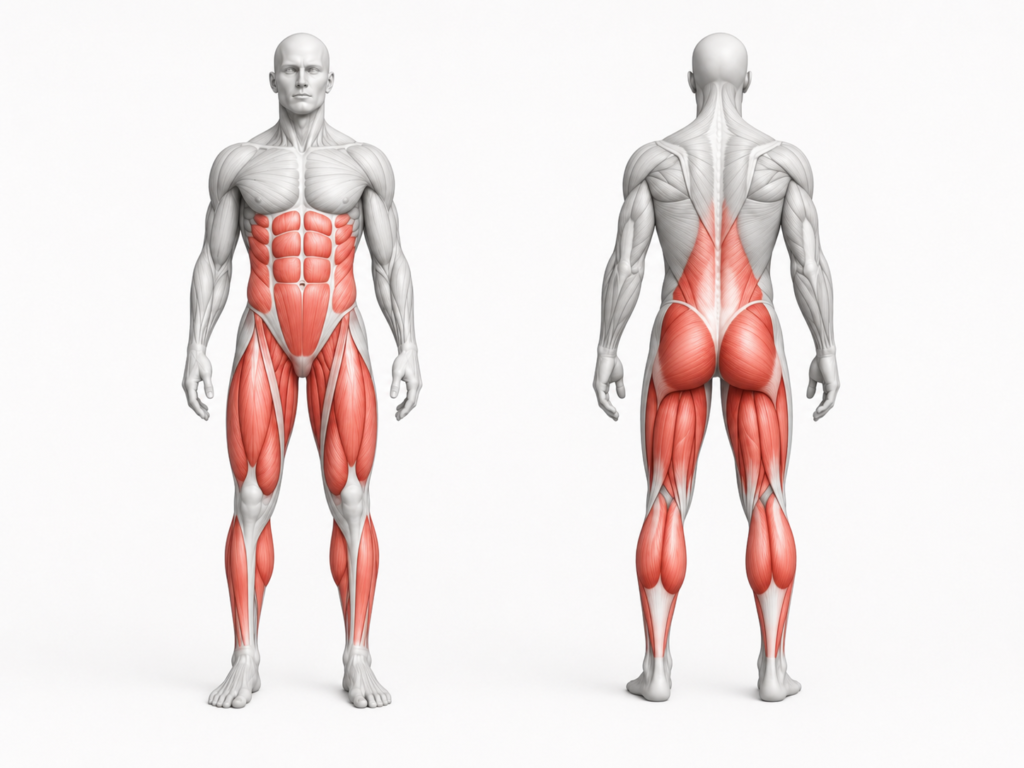
Muscles Worked — What’s Actually Happening
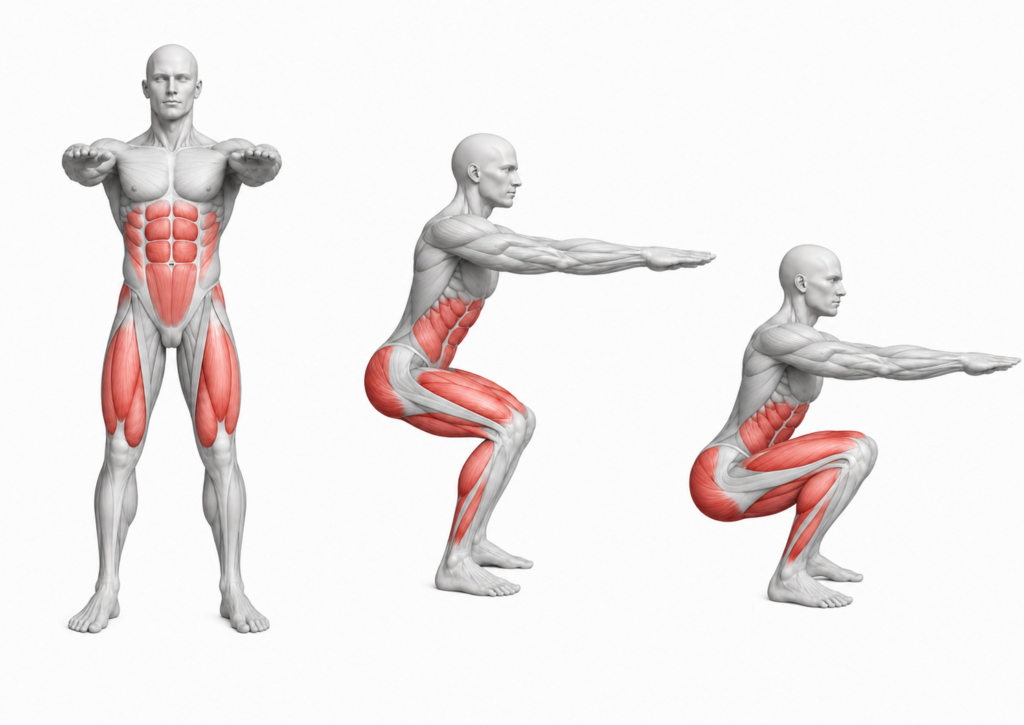
The bodyweight squat works more of your body than most people expect from something that looks so simple. The primary movers are your quadriceps — the muscles at the front of your thighs — which drive the knee extension that brings you back up. Your glutes and hamstrings support the hip movement throughout the descent and drive. Your core works constantly to keep your torso stable and your spine neutral.
What makes the squat valuable beyond the muscles it builds is the way it trains your body to move as a connected system. Your legs, hips, and core learn to work together rather than in isolation. That coordination carries over into everything — climbing stairs, kneeling down, lifting, carrying. For me it was most obvious in how my body handled a long shift on my feet. The squat built the resilience my legs needed to function well under sustained demand.
Where This Fits
The bodyweight squat is where the squat progression on this site begins. Master this and you have the foundation for the goblet squat, and eventually the barbell back squat — the most demanding expression of the pattern. If you want to see where this movement leads and what the full progression looks like, the Moving to Advanced guide maps out exactly what changes as the weight and complexity increase.
The squat doesn’t exist in isolation. It pairs naturally with hinge work — the glute bridge is the ideal complement at beginner level, training the posterior chain that supports everything the squat demands of your hips and lower back. Together these two movements cover the most important lower body patterns you’ll ever train.
If you’re building a complete beginner routine around these movements, how to structure your workouts as a beginner gives you a practical framework for putting it all together — how often to train, how to sequence movements, and how to progress without burning out.
And don’t overlook what happens between sessions. The squat is a surprisingly demanding movement when done properly and consistently. Eating to support recovery isn’t complicated but it makes a real difference to how quickly you adapt and how good your legs feel going into the next session.
Join The Conversation
If you’re just starting out with the bodyweight squat I’d love to hear how it’s going. How many reps can you hit in a row right now? Drop a comment below — whether you’re at 5 or 25, you’re building something that compounds over time.