Resistance bands get sold on convenience. Cheap, light, fits in a drawer, works in a hotel room. All true, and all beside the point.
The useful thing about a band is what it does to a movement. A dumbbell only ever pulls toward the floor. A band pulls in whichever direction you anchor it — including upward, which is how the same piece of rubber can take weight off you instead of adding it. It also stretches, so the resistance climbs as you move rather than sitting at one fixed number.
Those two properties put a band at three completely different points in training: getting onto a movement you can’t do yet, fixing one that isn’t reaching the right muscle, and loading a pattern so lightly that you can learn it properly before anything heavy arrives.
What a Band Actually Does
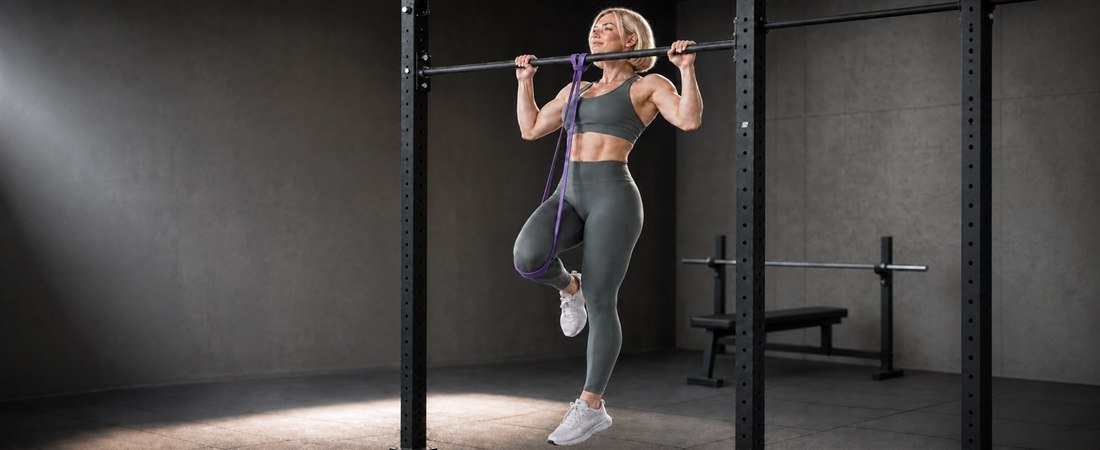
It takes weight off a movement you can’t do yet. Loop a band over a pull-up bar, put a knee in it, and the band catches part of your bodyweight at the bottom of the rep — exactly where a pull-up is hardest. What that buys you isn’t a free pull-up. It’s repetitions. Instead of one failed attempt, you get five to eight controlled reps, which is enough for your body to learn the pattern: elbows driving down, shoulders held down and back, chest arriving at the bar under control. Band-assisted pull-ups work because the pattern you practise is the real one, just lighter. Nothing about the movement gets swapped out for something easier — only the load changes.
Expect this to take longer than it sounds. Most of the work is building strength you don’t have yet, and that runs in months rather than weeks. The band isn’t a shortcut past that. It’s what makes the practice possible while it happens.
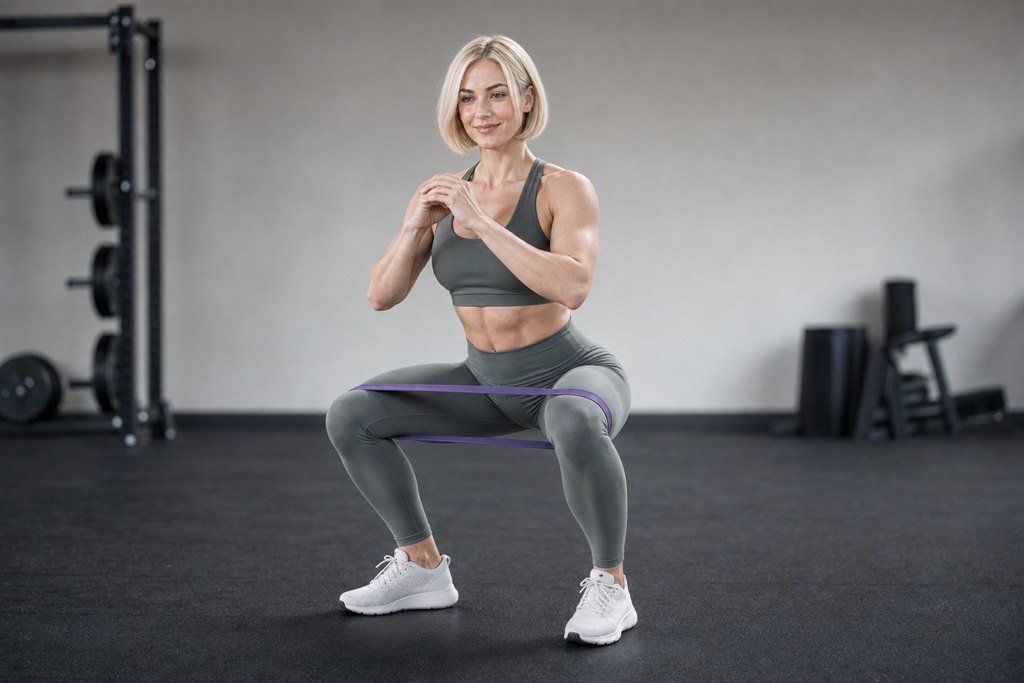
It adds resistance in the direction you’re failing. This is the job nothing else does well. Put a band around your knees during a squat and it pulls them inward — the exact direction they already want to drift under load. Now your hips have something to push against for the whole set, top to bottom.
The effect shows up quickly. Do three or four sets with the band, take it off, and squat: the descent tends to feel more settled, less effortful. That’s the pattern being reinforced, and it’s the clearest sign banded squats are doing their job. Soreness on one side the day after is common and proves little on its own — the measure is in the set: count the clean reps each side, and watch that gap close over the weeks.
It’s the lightest resistance there is. A band starts at a tension well below the lightest dumbbell, and you control it by how far you stand from the anchor. That makes it the sensible first rung on a pattern you’ve never trained, and light enough to use before every session without costing you anything.
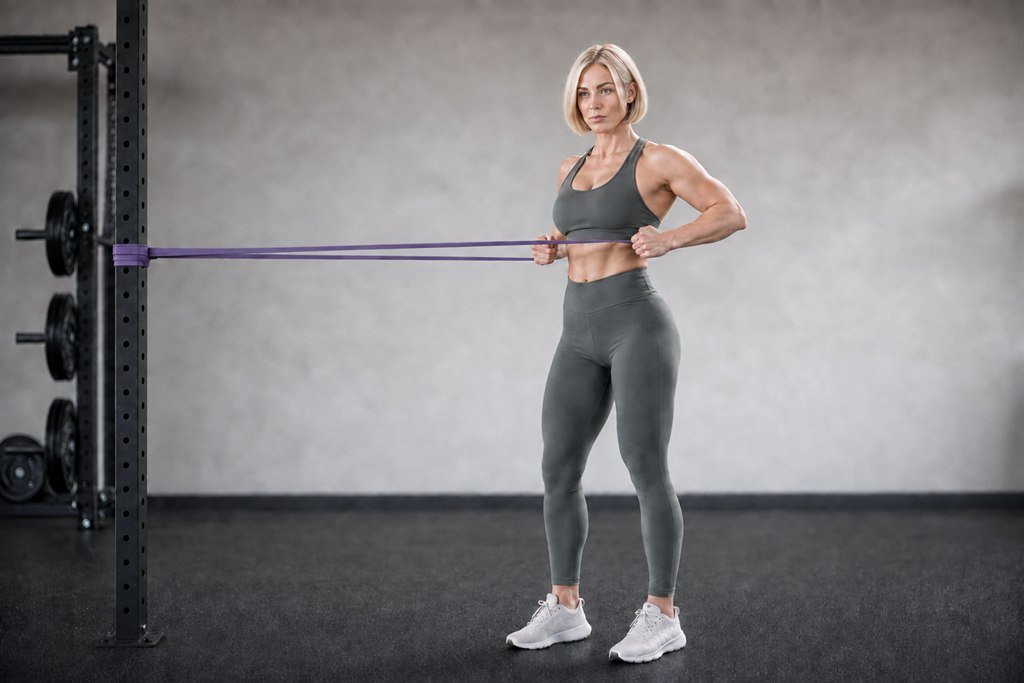
Both of those show up in pulling. Band rows are where the band is simply the resistance — anchor it at chest height, pull your elbows back, and learn what a row is meant to feel like with your body fully supported and nothing to balance. Add a hip hinge and the same pull gets harder because your back now works against gravity too. Then the band comes out of it entirely: an inverted row hangs you under a bar and makes your own bodyweight the resistance, with your core holding a plank the whole time. Three steps, each one earning the next, and none of them requiring a weight.
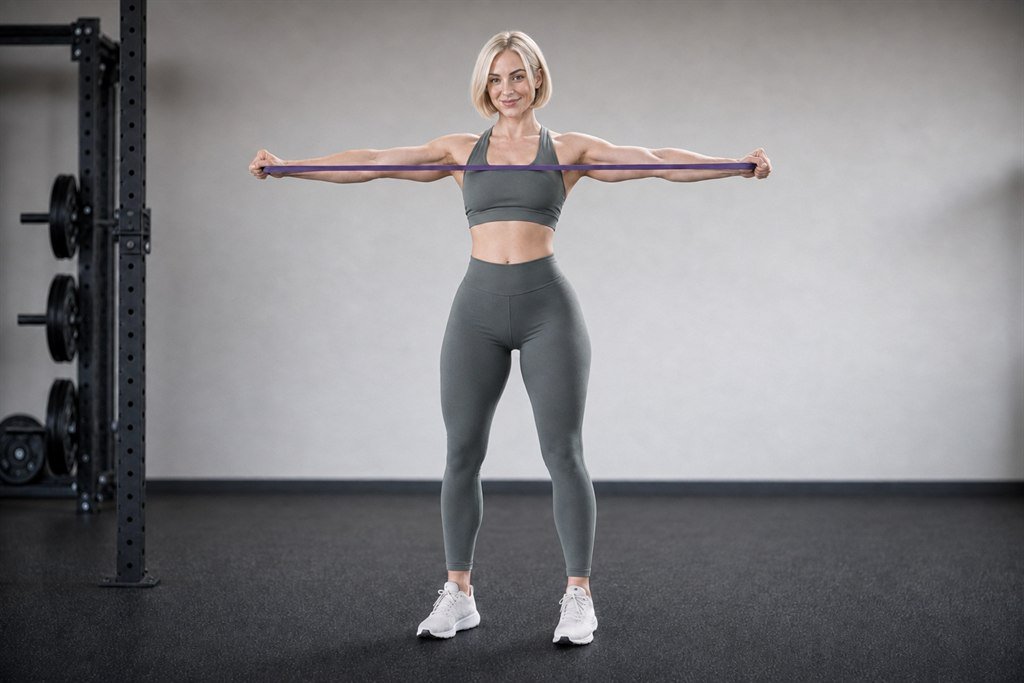
Band pull-aparts use the same lightness differently. Held at chest height and pulled apart until the band touches your chest, they train the back of the shoulder — the part that pressing and rowing consistently leave behind. Two minutes before an upper body session and the shoulders sit in position from the first rep instead of taking several sets to settle. Skip them and that stiffness is the first thing you notice. Keep the band light here on purpose: this is priming, not a set you’re meant to struggle through.
When You Need One
When a movement is simply unavailable. If you can’t do a single pull-up, more attempts at pull-ups won’t teach you much — there’s nothing to practise. The band gives you a version you can actually repeat.
When a movement happens but the right muscle isn’t showing up. A squat where the knees fall inward is still a squat; it’s just being run by the wrong muscles. Resistance in the failing direction gives the correct ones a reason to work.
When you’re learning a pattern for the first time and want the load low enough that form is the only thing you’re managing.
And before an upper body session, when the shoulders need waking up more than they need working.
Who This Is For
Someone training at home, or early enough in training that most equipment is either unavailable or more than they need.
Someone who can’t yet do a pull-up and wants a way onto one rather than a machine that trains something adjacent.
Someone whose knees drift together when they squat, or who wants that pattern solid before a loaded bar makes it matter.
Someone managing lower back history or hip weakness who needs the right glute and hip engagement built before loading. You don’t need to be rehabbing anything to benefit — but if you are, banded squats fill a place in the movement menu that other exercises don’t.
And someone whose shoulders feel stiff and out of position for the first half of every upper body session.
Where This Fits
None of these are permanent. Band-assisted pull-ups thin out toward negative pull-ups and then unassisted ones. Band rows lead into the seated cable row once bodyweight stops being enough. Banded squats sit between the bodyweight squat and a loaded bar, doing their work and then stepping aside.
Pull-aparts are the exception — they stay. Priming work doesn’t get outgrown, because the pressing that creates the need never stops. They pair naturally with face pulls, which add the outward rotation that heavy pressing specifically undermines. If you only do one, face pulls address the more specific weakness, but pull-aparts set up anywhere and give the face pull something to build on.
Resistance Band Exercises At A Glance
Each band exercise, what the band is doing in it, and where the movement leads next.
| Exercise | What the band does | Where it leads |
|---|---|---|
| Band-Assisted Pull-Ups | Takes part of your bodyweight off the bottom of the rep | Negative pull-ups, then unassisted |
| Band Rows & Inverted Rows | Is the resistance, at its lightest and most controllable | Inverted rows, then cable and barbell rows |
| Banded Squats | Pulls the knees inward so the hips have to push out | The barbell back squat |
| Band Pull-Aparts | Stays light enough to use before every session | Stays — it’s priming, not a lift |
A band isn’t a lesser version of real equipment. It does things a weight can’t: it subtracts load, it pulls sideways, and it goes light enough to teach a pattern before that pattern has to hold anything up.
Used at the right moment, that’s not a compromise. It’s the tool that gets you to the point where heavier things become worth doing.
Join The Conversation
Which band exercise did the most for you — and what changed once you dropped it? The step off the band is usually the interesting part. Drop a comment and say where you’re at.