If you’re new to fitness, the hardest part isn’t motivation — it’s knowing what actually matters.
Most beginners jump between diets, workouts, and advice without a clear structure. That’s why progress feels inconsistent and frustrating.
This guide breaks fitness down into three essential pillars — nutrition, training, and mindset — and shows how they work together to create real, sustainable results.
Master these foundations, and you stop guessing, stop restarting, and finally build momentum that lasts.
This guide is designed for beginners who want clarity, consistency, and a simple place to start.
🥩 Nutrition: Fuel Your Body Right
Food is the foundation of your fitness. You can train hard every day, but if your nutrition is off, your body won’t recover, build muscle, or burn fat effectively. The secret isn’t complicated diets — it’s consistency.

Why Nutrition Is King
- Energy: The right fuel means better workouts.
- Recovery: Protein repairs muscle after training.
- Discipline: Meal prep removes the “what should I eat?” decision that derails progress.
🔑 The Basics of Fitness Nutrition
Forget fancy formulas — here’s what works for almost everyone:
- Protein first: Aim for 1.6–2.2g of protein per kg of bodyweight daily (chicken, beef, eggs, fish, Greek yogurt).
- Carbs for training fuel: Rice, potatoes, oats, and fruit give you clean energy.
- Healthy fats for hormones: Avocados, nuts, olive oil, and fatty fish.
- Hydration: 2–3L of water per day.
🍱 Meal Prep Made Simple
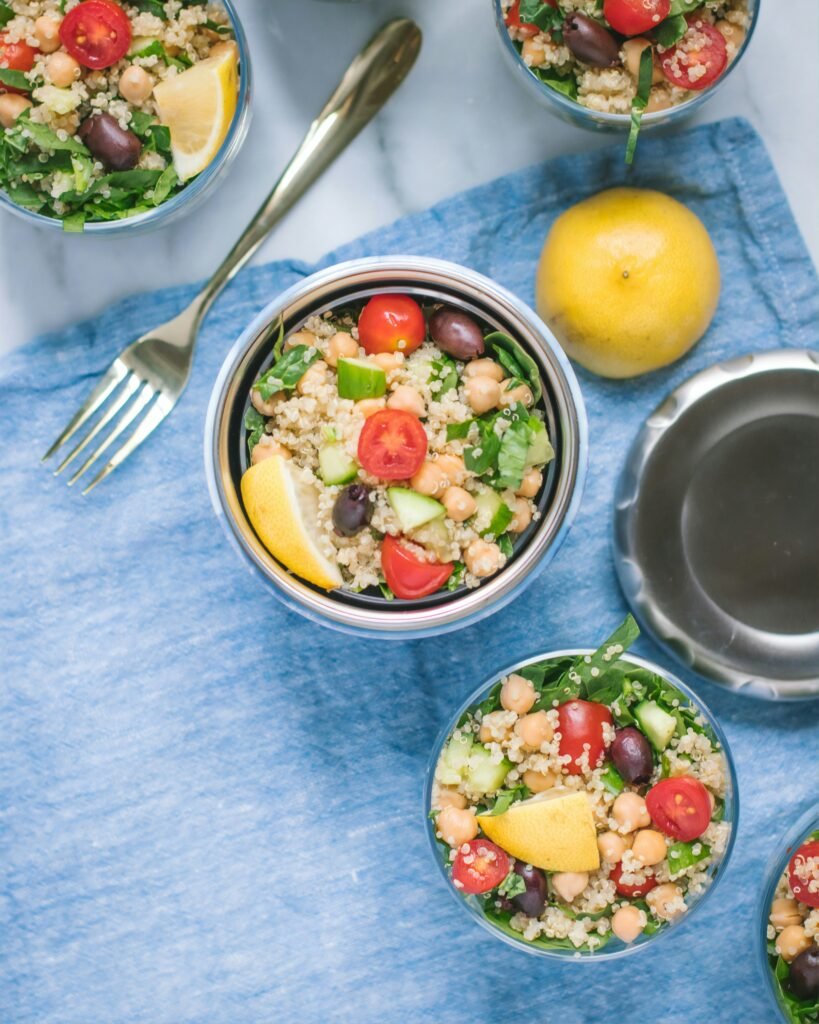
Meal prep isn’t about eating boring food — it’s about being prepared. Try this:
🥩 10 High-Protein Foods Every Beginner Should Keep On Hand
A good rule of thumb is to aim for ~30g of protein per meal. Here’s a quick guide to show you how much of each food you’d need to hit that target.
| Food | Protein per 100g | Portion for ~30g Protein |
|---|---|---|
| Chicken breast | ~31g | ~100g (≈ 1 small breast) |
| Eggs | ~13g | ~5 large eggs |
| Egg whites | ~11g | ~270g (≈ 8–9 whites) |
| Lean ground beef (90/10) | ~26g | ~115g (≈ 4 oz) |
| Salmon | ~25g | ~120g (≈ 1 small fillet) |
| Greek yogurt (non-fat) | ~10g | ~300g (≈ 1½ cups) |
| Cottage cheese (low-fat) | ~11g | ~270g (≈ 1 cup) |
| Tuna (canned in water) | ~23g | ~130g (≈ 1 can drained) |
| Lentils (cooked) | ~9g | ~330g (≈ 2 cups) |
| Whey protein powder | ~20–25g | ~1–1.5 scoops |
| Turkey breast | ~29g | ~105g (≈ 4 oz) |
💡 Pro tip: Invest in a pressure cooker or air fryer — it saves hours and keeps food tasty.
❓ Nutrition FAQ
Q: Do I need supplements to see results?
A: No, supplements are not required — food is where your body is truly built. Whole foods like beef, chicken, eggs, fish, and vegetables should always come first.
That said, supplements have helped me a lot to stay consistent. If you’re serious about getting fit, they can be very useful. Eating enough can be difficult for some people (myself included), and things like protein powder, creatine, or amino acids can make hitting your goals much easier.
Think of it this way:
- Food is the foundation → it gives your body the building blocks.
- Supplements are the support system → they help you stay on track when life gets busy or appetite is low.
They’re not magic, but if you want consistency and progress, they can play a key role.
Q: How many meals should I eat per day?
A: There’s no “perfect” number. Some thrive on 3 big meals, others on 5 smaller ones. What matters is hitting your daily protein, carb, and fat goals.
For protein intake, the widely recommended guideline is:
- 1.6–2.2 g of protein per kilogram of bodyweight per day
(≈ 0.7–1 g per pound of bodyweight) - This is enough to support muscle growth, recovery, and general health. Going higher isn’t harmful for most healthy people, but it usually isn’t necessary.
Q: Is eating carbs at night bad?
A: No. Carbs fuel recovery and sleep quality. The only thing that matters is your total intake across the day.
Q: What’s the best budget-friendly protein?
A: Eggs, canned tuna, ground beef, and lentils are cheap and effective staples. Another powerful money-saver is meal prepping — buying in bulk and cooking ahead cuts waste and makes sticking to your nutrition plan easier. (We’ll touch more on meal prepping later in this post.)
2. Training: Build Strength With Simplicity
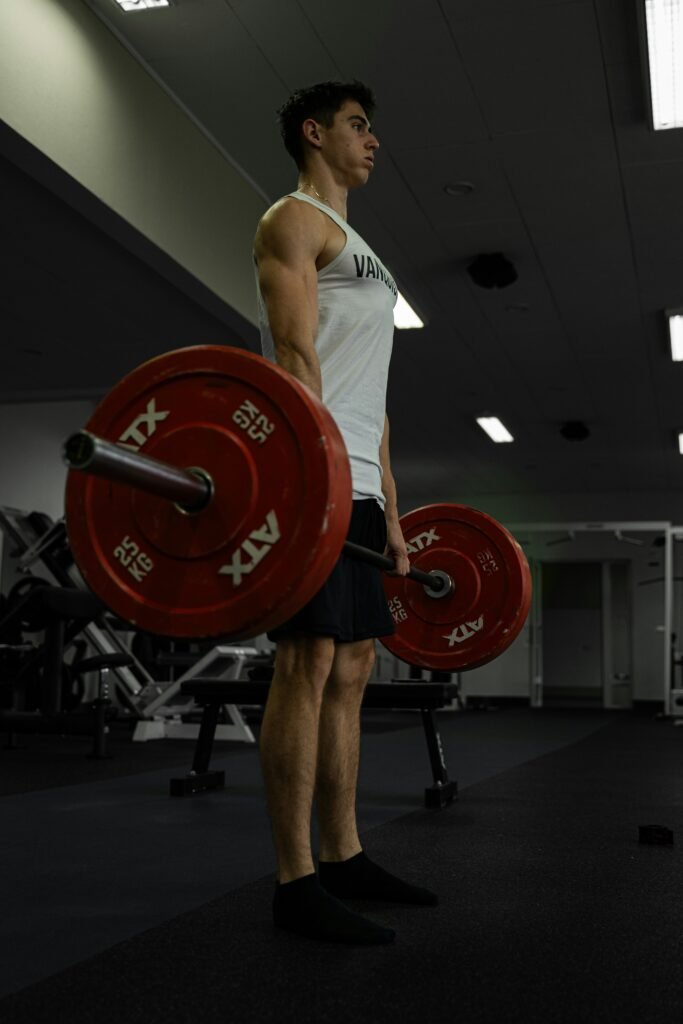
The gym doesn’t need to be complicated. You don’t need fancy machines or endless routines — what works best are compound movements. These are exercises that hit multiple muscles at once, giving you maximum results in less time.
✅ Why compound movements?
- Save time: one exercise trains several muscles at once.
- Build functional strength you can use in daily life.
- Burn more calories than isolation movements.
Examples of effective compound exercises:
- Squats – lower body powerhouse (legs, glutes, core).
- Deadlifts – full-body strength, especially posterior chain.
- Push-ups – chest, shoulders, triceps, and core.
- Pull-ups – back, arms, and grip strength.
How To Start (Beginner-Friendly Routine) If you’re new, aim for 3 full-body workouts per week, focusing on these basics:
🏋️ Full-Body First: The Best Beginner Foundation
A lot of beginners ask: “Should I do push/pull/legs or a split routine?” The truth is, splits are better later. When you’re starting out, full-body workouts 3–4 times a week are the best foundation you can build.
Here’s why:
- Faster progress: You’re training each muscle group multiple times per week instead of once.
- Better learning: You’ll get more practice with core lifts like squats, deadlifts, and presses.
- True functionality: Training the whole body together makes you stronger in real life, not just the gym.
👉 Yes, it’s tough — you’re breaking your whole body down and rebuilding it stronger. But that’s exactly how you build a solid, functional base that carries you into more advanced training later.
🏋️ Beginner Full-Body Progression Roadmap
Every full-body session should train the main movement patterns: squat, push, pull, and hinge. Start at your level and move up as you get stronger.
| Movement Pattern | Beginner | Intermediate | Advanced |
|---|---|---|---|
| Squat | Bodyweight squat (Learn proper form here → How To Squat Properly for Beginners) | Goblet squat (dumbbell/kettlebell) | Barbell back/front squat |
| Push (horizontal) | Incline push-ups / wall/box/bench push-ups | Standard push-ups / Dumbbell bench press | Barbell bench press |
| Pull (horizontal) | Band rows / inverted rows | Seated cable row / dumbbell row | Barbell row |
| Hinge | Glute bridge / hip thrust | Romanian deadlift (RDL) with dumbbells | Conventional deadlift |
| Pull (vertical) (optional) | Band-assisted pull-ups / lat pulldown | Neutral-grip pull-ups | Wide-grip pull-ups / weighted pull-ups |
| Core | Plank hold | Side planks / weighted plank | Hanging leg raises |
📝 Sample Beginner Full-Body Workout (Day One)
If you’re starting out, here’s a simple full-body workout using beginner-level moves from the roadmap:
- Bodyweight squats — 3×10 (legs, glutes, core)
- Incline push-ups — 3×8–12 (chest, shoulders, triceps)
- Band rows — 3×10 (back, arms)
- Glute bridges — 3×12 (posterior chain, hips)
- Plank hold — 3×30s (core stability)
How to do it:
- Rest ~60–90s between sets.
- Train 3x per week (e.g., Mon/Wed/Fri).
- Stick with these for 4–6 weeks, then progress to the intermediate options.
💡 Insider Insight: Why Rest Matters More Than You Think
Most beginners rush their sets, thinking shorter rest = harder workout. But the real driver of muscle growth is mechanical tension — the load your muscle experiences when it’s close to failure.
- Resting 60–90s (or longer for heavy lifts) lets your muscles recover enough to hit that tension again in the next set.
- Without proper rest, you just pile on fatigue — but never reach the level of effort that triggers growth.
- Smart rest = more effective reps = faster results.
👉 Don’t fear the pause — use it to reload and push your muscles harder where it counts.
👉 How to use this roadmap:
Train full-body 3–4x per week, progressing up the ladder over time.
Pick one movement from each row (Squat, Push, Pull, Hinge).
Perform 3 sets of 8–12 reps (or hold 30–60s for planks).
➡️ Pro Tip: Stick with the same moves for 4–6 weeks. Progress by adding a bit of weight or reps each week — that’s how real strength is built.
Quick At-Home Option
No gym? No problem. Do this 15-minute bodyweight circuit 3–4 times per week:
- 15 squats
- 10 push-ups
- 10 lunges per leg
- 20-second plank
(Rest 60 seconds, repeat 3–4 rounds)
Training – Key Takeaways
✅ Start simple and stay consistent.
✅ Progress slowly, but don’t stop.
✅ Mix strength and cardio for well-rounded results..
Training FAQ
Q: How many days a week should a beginner train?
A: Start with 3–4 days per week, focusing on consistency rather than perfection. As your fitness level improves, you can gradually increase intensity or frequency. Correct movement patterns are the foundation of quality growth, so don’t stress about volume — focus on moving well first.
Q: Do I need a gym to get results?
A: Not at all. Bodyweight exercises, resistance bands, or simple home equipment can be highly effective. The key is progressive overload — challenging your body a little more over time. However, a gym can be highly beneficial thanks to the variety of equipment and the efficiency it provides.
Q: What’s more important — cardio or strength training?
A: Both matter. Strength training builds muscle and boosts metabolism, while cardio supports heart health and endurance. Beginners should aim for a balanced mix.
The Power of Tracking: Unlock Consistency & Progress

Most people fail in training not because they don’t work hard, but because they don’t track what they’re doing. Without a system, it’s easy to repeat the same workout without progress — or worse, lose motivation because you don’t see results.
✅ Why simple tracking works:
- Keeps you accountable — you’ll know if you skipped a workout.
- Helps you understand your body — noting “squats felt easier today” or “back felt tight” teaches you how exercises impact you.
- Makes progress visible — nothing is more motivating than looking back at your notes and seeing real growth.
How To Track (Without Overcomplicating It)
- Notebook or app: Write down your exercises, sets, reps, and weights.
- Notes on effort: Add a quick thought like “last set felt heavy” or “had more in the tank.”
- Weekly review: Glance back and notice trends — are weights going up, reps improving, or rest times getting shorter?
Progressive Overload Made Easy
Progressive overload simply means doing a little more over time. That could be:
- Adding 2.5kg to a lift.
- Doing 1–2 more reps than last week.
- Resting 10 seconds less between sets.
By tracking, you see these improvements and know when to push. This keeps you progressing instead of spinning your wheels.
Key Takeaway:
Don’t just train — track. A simple workout log turns the gym from guesswork into a science, ensuring you improve steadily and understand your body better each week.
3. Mindset: The Key To Long-Term Success

Training hard and eating clean will get you started, but mindset is what keeps you going. Without it, routines fall apart the moment life gets busy. With the right mindset, you’ll stay consistent even when motivation fades.
Why Mindset Matters in Fitness
- Discipline beats motivation: Motivation comes and goes, but discipline is built daily.
- Clarity reduces excuses: When you know why you’re training and eating right, skipping doesn’t feel like an option.
- Stress management: Exercise isn’t just for the body — it resets the mind, lowers stress, and sharpens focus.
Practical Mindset Habits
- Set small, clear goals: Instead of “I want to get fit,” try “I’ll complete 3 workouts this week.”
- Celebrate consistency, not perfection: Missing one day won’t ruin progress. Focus on your average effort over time.
- Journal reflections: Write a quick line after workouts — “felt stronger today” or “tired but pushed through.” Over time, this builds awareness and resilience.
Mindset = Longevity
Building a strong, healthy body takes months and years — not weeks. The key is consistency. By shaping a resilient mindset, you’ll not only reach your goals but also maintain them for life.
That doesn’t mean you won’t notice early progress. In fact, you will — and those first wins are powerful. Celebrate the small victories and use them as fuel to keep moving forward. They’re the proof that your effort works, and the foundation for everything that comes next.
Mindset – Key Takeaways
✅ Focus on building habits, not chasing motivation.
✅ Progress is never a straight line — keep going.
✅ Discipline grows stronger the more you practice it.
Mindset FAQ
Mindset FAQ
Q: How do I stay motivated when progress feels slow?
A: Shift your focus from quick results to long-term habits. Celebrate small wins — they compound over time.
Q: What if I fall off track?
A: It’s normal. What matters is getting back up. One missed workout or off-plan meal doesn’t erase your progress.
Q: How do I build discipline if I’m not naturally motivated?
A: Motivation comes and goes. Discipline is built by creating routines and sticking to them, even when you don’t feel like it. Start with small, manageable actions. When you commit to something positive, even if you don’t give 100%, you’ll feel proud because you took control when your mind resisted.
These 3 pillars are your starting point. Keep them simple, stay consistent, and your results will follow. When in doubt, come back to this foundation.
You’ve just learned the foundation of fitness: Nutrition, Training, and Mindset.
Knowing the pillars is the first step — but the real results come when you start applying them.
To help you, I’ve broken each pillar into a focused series of articles. Choose where you want to begin:
The Fitness Foundation for Beginners: How the 3 Pillars Work Together
Most beginners fail not because they lack motivation — but because they focus on one pillar while neglecting the others.
Real progress happens when nutrition, training, and mindset support each other.
The Beginner Rule:
Build your base with nutrition → move your body with intention → protect consistency with mindset.
Each pillar links to a dedicated beginner guide where I break things down step-by-step.
🍎 Nutrition
Your foundation. Start here.
- Learn the basics of clean eating
- Discover beginner-friendly protein sources
- Simple meal structure that works
- Beginner Nutrition Checklist
- Eat a protein source at every meal
- Stick to 1–2 repeatable meals during the week
- Prioritise consistency over variety
- Drink water consistently
🏋️ Training
Apply the fuel. Train safely and progressively.
- Learn the importance of warming up
- Beginner-friendly movement patterns
- Tips for consistent progress
- Beginner Training Checklist
- Train 2–4 times per week
- Focus on basic movement patterns
- Warm up before lifting
- Progress slowly and safely
🧠 Mindset
Stay consistent long enough to win.
- Find your personal “why”
- Build discipline over motivation
- Learn goal-setting strategies
- Beginner Mindset Checklist
- Focus on showing up, not motivation
- Expect slow progress early
- Remove unnecessary decisions
- Track consistency, not perfection
If you’re overwhelmed:
Start with nutrition. Eat consistently for 2–3 weeks.
Then add training.
Mindset keeps it all together.
If you want to see how these principles actually changed my life, check out My Story here.
What do you think? Drop your thoughts below — I’d love to hear how you approach these 3 pillars.