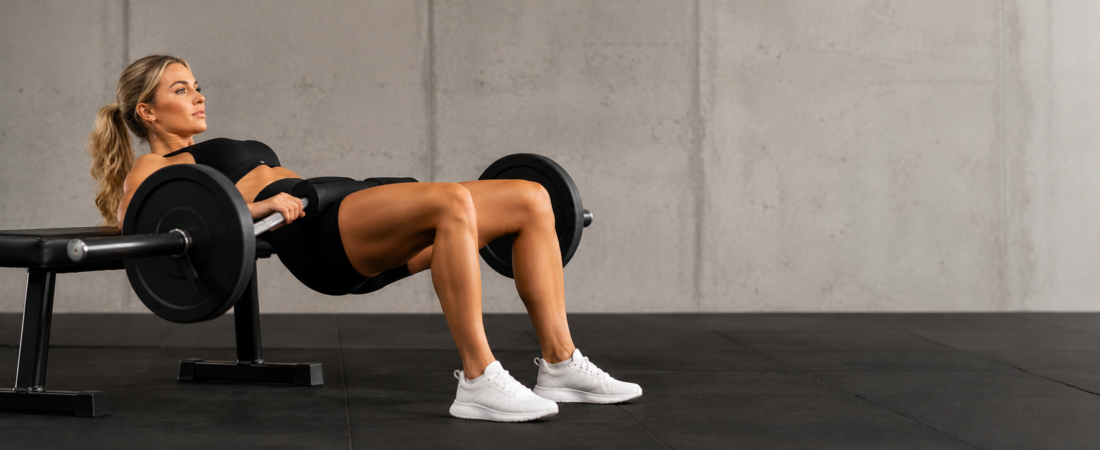
The hip thrust is one of the most effective exercises for building glute strength — and one of the most commonly done wrong. Not wrong in a complicated way. Wrong in one specific, fixable way: people feel it in their lower back or hamstrings instead of their glutes, assume it isn’t working, and move on to something else.
The reason is predictable. At the top of the movement, when the hips are fully extended, most beginners either let the lower back arch or don’t contract the glutes deliberately. Both positions shift the load to where it doesn’t belong. The glutes are capable of doing this job — they just need to learn how to fire under load before the weight increases.
This guide covers the dumbbell hip thrust first, where the lighter load lets you find the pattern and feel the glutes contracting before the weight demands your attention. Then it covers the barbell glute drive — how to set it up, how to load it, and how to know when the movement is doing what it’s supposed to. By the end you’ll know not just what to do, but where you should feel it at every stage.
The hip thrust fits naturally into a lower body day alongside squats and hinge work. If you haven’t mapped your training week yet, start here: how to structure your workouts as a beginner
What Is This Exercise?
A hip thrust is a hip extension exercise where you drive your hips upward from a position with your upper back against a bench. It trains the glutes through a fuller range of motion than a floor bridge allows, making it one of the most effective exercises for building posterior chain strength without loading the spine.
What you need: A flat bench, a dumbbell, and a barbell with a barbell pad.
This is a hinge movement — your hips bend backward while your knees stay mostly soft, the same motion you use bending down to pick something off the floor.
Dumbbell Hip Thrust
Sets & Reps
When you’re learning the movement:
- 3 sets of 10–12 reps
- Use a weight light enough that you can feel the glutes working clearly on every rep — not so light the movement is effortless, not so heavy your back takes over
- Rest 60–90 seconds between sets
- Stop the set if the lower back starts to dominate
When the pattern feels solid:
- 3–4 sets of 8–12 reps with a weight that challenges the last 3 reps
- Rest 90 seconds between sets
- If 12 reps feel easy with clean form across all sets, increase the load
When you’re ready to progress:
- Move to the barbell glute drive — the dumbbell version is a teaching tool; the barbell is where strength builds long-term
How To Do It
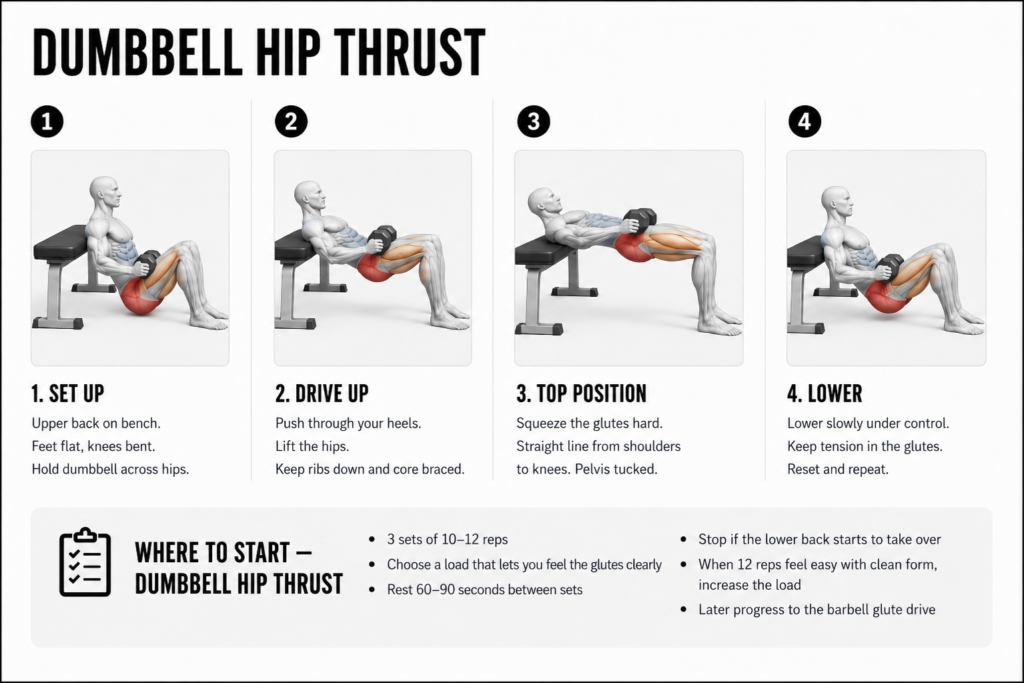
Sit on the floor with your upper back resting against the edge of a flat bench. Feet flat on the floor, hip-width apart. Hold a dumbbell horizontally across the crease of your hips — the soft tissue just below the hip bones. Before you move, set your chin level with the floor. It should stay there throughout.
Drive through your heels and push your hips upward until your body forms a straight line from shoulders to knees. At the top, squeeze your glutes deliberately — not just arrive there, but actively contract them — and tuck the pelvis slightly rather than letting the lower back arch. Pause one second at the top. Lower with control and repeat. The pause is not optional: it is where the glutes do their work.
Progress to the barbell when you can complete 3 sets of 12 reps with a clear glute contraction at the top and no lower back discomfort throughout.
Key Points To Pay Attention To
- Chin stays level throughout — not craning toward the ceiling, not tucked to the chest. The head follows the torso, not the hips.
- Drive through the heels, not the toes. If the weight shifts onto the ball of the foot, the feet are too close to the body.
- At the top, hips reach full extension — thighs close to parallel with the floor. Half-range is half the stimulus.
- The squeeze at the top is the exercise. Reaching the top position without contracting the glutes deliberately is a wasted rep.
- Keep the ribs down as the hips rise — you are squeezing glutes, not arching through the lower back. The distinction feels different and is different.
- Lower under control. A two-second descent keeps the muscle loaded on the way down and builds strength in both directions.
What You Should Feel
The dominant sensation at the top of each rep should be a hard contraction through the entire glute — including the lower portion near the tailbone. Hamstrings will be working throughout the drive and that is correct, but they should be contributing, not leading. Your core should feel quietly engaged from the start, holding the pelvis steady without you having to think about it.
If you have never properly fired the glutes under load, the first few sessions may feel disconnected — like you cannot quite locate the right muscle. That is normal. Slow the reps down, hold the top for a full second, and focus on the squeeze rather than the range of motion. For many people the connection arrives suddenly: one set the glutes feel passive, the next they fire clearly and the movement clicks into place. That shift is the pattern establishing itself.
If you feel it mainly in the lower back, you are either arching at the top instead of squeezing, or your feet are too far from the body. Reset: feet hip-width and positioned so the shins are close to vertical at the top, tuck the pelvis before driving, and reduce the weight until the pattern is clean.
Common Mistakes
Arching the lower back at the top
The hips reach full height but the lower back extends to get there rather than the glutes contracting to drive it. The position looks right from the outside but the wrong muscles are doing the work. Fix it by tucking the pelvis and squeezing the glutes deliberately before the hips lock out — the arch disappears when the glutes are actually firing.
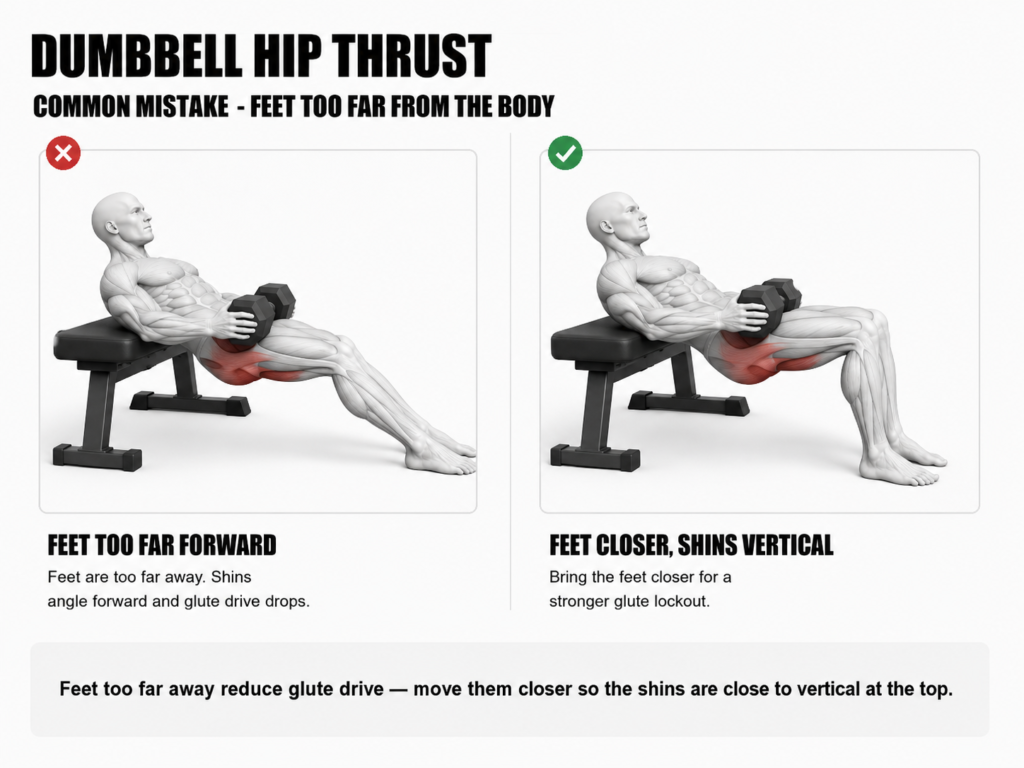
Feet too far from the body
When the feet are too far forward the shins angle away from vertical at the top and the quads take load the glutes should own. The fix is simple: position the feet so the shins are close to vertical when the hips are fully extended.
Skipping the pause at the top
Moving through the top position without stopping removes the most important part of the movement. The glutes do their work under contraction at full hip extension — not during the drive up. One deliberate second at the top is not optional.
Who This Is For
- Anyone who has built a foundation with the floor glute bridge and elevated hip thrust and is ready to add load
- People returning to training who want to rebuild glute strength with spinal demand removed from the equation
- Lifters whose lower body training has been quad-dominant and who need to develop the posterior chain to balance it
- Anyone preparing for barbell compound work who wants the glutes firing reliably before adding spinal load
Why This Movement Matters
The floor glute bridge teaches the pattern. The elevated hip thrust extends the range. The dumbbell hip thrust is where you start loading it — and that distinction matters more than it looks. Loading the glutes through a full range of hip extension is what builds strength that carries over into squats, deadlifts, and every lower body movement you do. A glute that has only ever worked against bodyweight is not doing its full job.
The dumbbell version gives you something the barbell cannot — independent feedback from each side. If one glute is consistently stronger, you will feel it. That self-correcting quality is harder to detect under a barbell across both sides at once, which is exactly why this version comes first.
Stay here until the pattern is clean. The barbell version is the same movement with more weight and more demand. If the dumbbell version has taught the glutes to contract properly under load, the transition will make immediate sense.
The dumbbell hip thrust is where the hip extension pattern gets loaded for the first time — get the squeeze right here and the barbell version will follow naturally.
Barbell Glute Drive
Sets & Reps
When you’re learning the loaded position:
- 3 sets of 8–10 reps at a weight that keeps the glute contraction clean throughout
- Rest 2 minutes between sets — the load is significantly heavier and the posterior chain needs the recovery
- If the lower back takes over at any point, reduce the weight before the next set
When the pattern feels solid:
- 3–4 sets of 6–10 reps at a working weight that challenges the final 2–3 reps
- Progressive overload applies here — add weight when the current load feels controlled across every set with no breakdown
- Rest 2 minutes between sets
When you’re ready to push:
- 3–5 sets of 5–8 reps at a genuinely heavy load
- One session per week at this intensity is enough — the barbell glute drive is more demanding on the posterior chain than it appears
- Always follow heavy sessions with a lighter technique session the following week
How To Do It
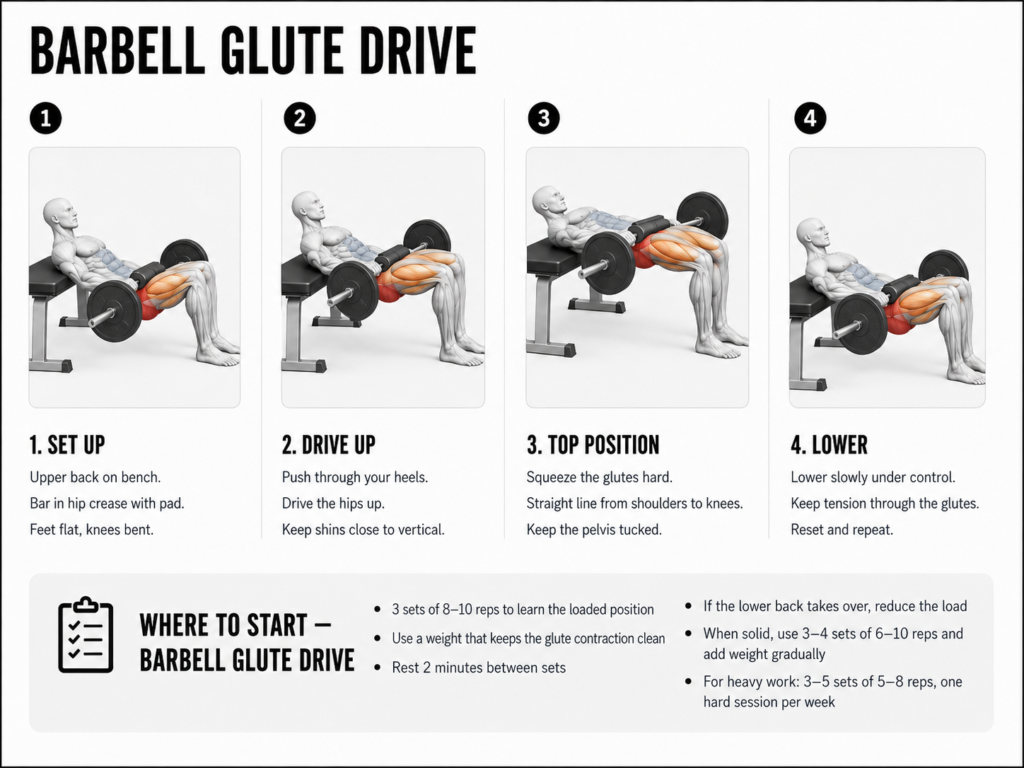
Set up the same way as the dumbbell version: upper back against the flat bench, feet hip-width, flat on the floor. Roll the barbell over your legs until it sits in the crease of your hips. Use a barbell pad — the pressure of a loaded bar directly on the hip bones becomes uncomfortable quickly and will compromise how hard you can focus on the movement itself. This is not optional equipment.
With the bar positioned, brace your core, set the chin level, and drive through the heels exactly as you did with the dumbbell. The bar should stay in the hip crease throughout — not rolling up toward the abdomen or down toward the thighs. At the top, squeeze the glutes, hold for one second, and check the position: hips, knees, and shoulders should form a straight line. Lower under control — two to three seconds — and repeat.
You are ready for this when you can complete 3 sets of 12 dumbbell hip thrusts with a consistent, deliberate glute contraction at the top and no involvement from the lower back.
Key Points To Pay Attention To
- Use a pad. The setup needs to be comfortable enough that attention stays on the movement, not on managing discomfort at the hip.
- The bar stays in the hip crease throughout — if it migrates during the set, reset before the next rep.
- Brace before every rep. Under a loaded bar, a missed brace shows up immediately as lower back discomfort or the pelvis tipping forward.
- The top position is a straight line, not a hyperextended arch. Drive the hips up, squeeze the glutes deliberately, and stop there.
- Feet positioned so the shins are close to vertical at the top — if the shins angle sharply forward, the feet are too close and the quads are taking load the glutes should own.
- Lower slowly. A two-to-three second descent under a barbell provides a training effect the dumbbell version cannot match.
What You Should Feel
Under a loaded barbell the glute contraction at the top should feel significantly more intense than the dumbbell version — a hard, deep squeeze through the entire glute including the lower portion near the tailbone. The hamstrings will be working harder too, contributing to the drive, and that is expected and correct. The whole posterior chain is under load simultaneously and you will feel it across the back of your lower body in a way the dumbbell version does not replicate.
The core will be working harder than it looks from the outside. A loaded pelvis wants to tip, and the brace is what keeps it stable. If the lower back starts compressing or taking over from the glutes, the weight is too heavy or the brace has broken down. Strip weight before developing the habit of compensating.
Some people find that consistent loaded hip thrusts produce a level of pelvic and posterior chain awareness they have never had before — a sense of control and connection through the lower body that extends into other movements. That is not incidental. It is the result of asking the posterior chain to do sustained, demanding work it may never have been properly asked to do before.
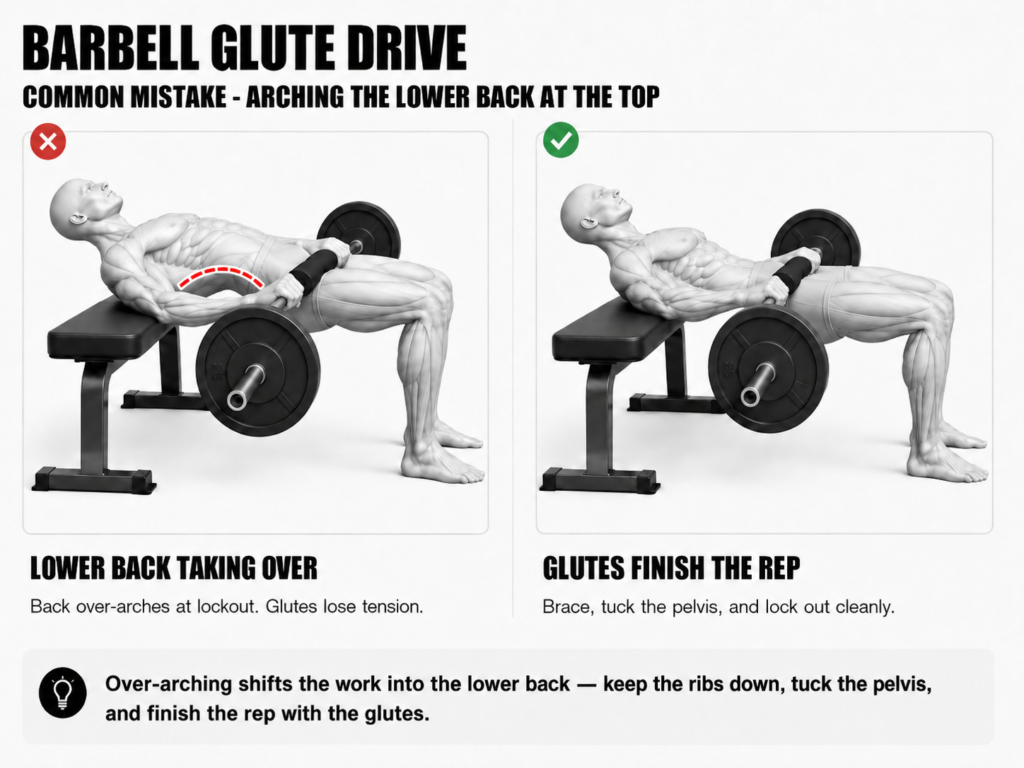
Common Mistakes
Arching the lower back at the top
More load makes this mistake more common and more costly. Under a barbell the lower back will take over if the brace breaks down or the glutes aren’t firing properly. Squeeze before the hips lock out, tuck the pelvis, and if the lower back is still the dominant sensation strip weight before the next set.
Bar migrating out of the hip crease
The bar drifts toward the abdomen or down toward the thighs during the set. Both positions compromise leverage and make the movement harder to control. Reset the bar position before every rep if needed — it should stay in the same place throughout.
Feet too far from the body
Same error as the dumbbell version, higher cost under load. Shins close to vertical at the top. If the shins are angled sharply forward the feet need to move closer.
Who This Is For
- Lifters who have established a clean dumbbell hip thrust pattern and are ready to load the movement systematically
- Anyone building toward heavier compound work who wants a strong posterior chain that does not depend on the spine to carry the load
- People whose glutes have never been the dominant mover in their lower body training and who want to change that
- Trainees managing lower back history who need to build hip extension strength without spinal compression
Why This Movement Matters
The barbell glute drive loads the hip extension pattern under serious weight — and because the spine is not bearing that load, you can push further than in movements where the lower back is the limiting factor. That combination, heavy load through full range of motion without spinal compression, is what makes this exercise difficult to replace.
The practical carry-over is direct. The lockout strength required at the top of a deadlift is hip extension strength. The drive out of the bottom of a squat involves the glutes powering the hips through. A posterior chain that has been systematically trained to produce force through full hip extension under load contributes to both of those movements in ways that machines and isolated exercises cannot replicate.
Building this strength also builds something less visible but equally important: the support structures around the lower spine get stronger not because they are loaded directly, but because a strong posterior chain reduces the demand placed on them. That protective effect compounds over a training career in a way most people only notice when it has been missing.
The barbell glute drive builds the posterior chain strength that supports everything else in your lower body training — load it progressively and give it the time it takes to develop properly.
Muscles Worked — What’s Actually Happening
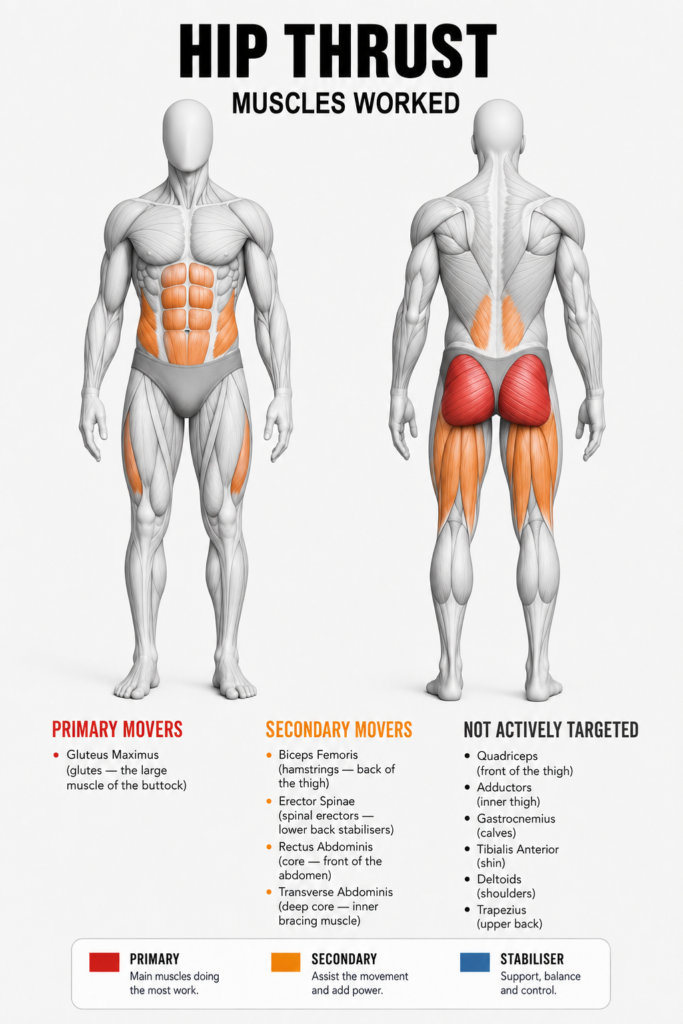
The hip thrust is a posterior chain exercise and the glutes are the primary mover without question. The gluteus maximus — the large muscle of the buttock — drives the hips into full extension on every rep, and at the top of the movement, with the hips locked out and contracted deliberately, it is working at or near its full range. No other common exercise loads it this completely in this position. That specificity is what gives the movement its value.
The hamstrings contribute throughout the drive, assisting hip extension and working harder as the load increases. In the dumbbell version their involvement is present but secondary. Under a barbell, especially as the weight climbs, they work more significantly — which is part of why a heavy barbell glute drive session leaves the entire back of the lower body worked rather than just the glutes. The movement becomes increasingly a posterior chain exercise as the load increases, not just a glute isolation.
The shift between the dumbbell and barbell versions happens most clearly in the core. With a dumbbell the core’s job is relatively quiet — stabilising the pelvis against a moderate load. Under a barbell, with heavier weight and a pelvis that wants to tip, the core has to work to maintain the brace throughout the set. That increased demand is a training effect in itself: the core learns to hold position under load it hasn’t faced before.
One thing worth knowing before you start: in the first few weeks of serious loaded hip thrust training, strength comes before visible change. That is the nervous system learning to recruit the glutes consistently and fully under load — a pattern many people have never properly established. The glutes may have been present but underused for years. Strength arrives first, size follows. Stay with the early sessions and focus on the quality of the contraction rather than the weight on the bar.
Where This Fits
The hip thrust sits inside the hinge pattern — alongside the glute bridge, the Romanian deadlift, and the conventional deadlift — but it occupies a specific place in that progression that nothing else fills. Where the glute bridge teaches the body to extend the hips cleanly without load, and the Romanian deadlift builds the hinge under load with spinal demand, the hip thrust loads the hip extension pattern directly with the spine removed from the equation. That distinction makes it useful across the entire training career, not just at beginner level.
For anyone working toward the conventional deadlift, the hip thrust builds the lockout strength and glute function that the deadlift depends on at the top of the pull. A posterior chain that can produce force through full hip extension under load is one that transfers directly into every compound movement. The two exercises are not competing for the same training slot — they complement each other, and consistent hip thrust work makes the deadlift feel more complete and controlled.
The hip thrust is also one of the more recovery-friendly lower body movements because it does not load the spine. That means it can be trained alongside squats and deadlifts in the same week without adding the same systemic fatigue those movements create. Understanding how to manage that across a training week — what gets prioritised, what recovers, what compounds — is covered in why recovery matters. The hip thrust is a useful piece of that picture.
This is not an accessory movement or a finishing exercise — it is foundational posterior chain work. Load it progressively, keep the contraction honest, and it will compound over a long training career.
Join The Conversation
Where are you in this progression — working through the dumbbell version or have you moved to the barbell?
- Where do you feel it most clearly: the whole glute, the lower portion near the tailbone, or somewhere you weren’t expecting?
- If you’ve struggled to feel your glutes working in squats or deadlifts, did the hip thrust change that?
Drop a comment below. The more specific you are, the more useful it is for everyone reading.